
Last updated September 10, 2026
Full 25-point door and opener safety check with every visit - springs, cables, rollers, tracks, and your LiftMaster or Chamberlain opener included
You get a price before we start. It does not change when the truck arrives.
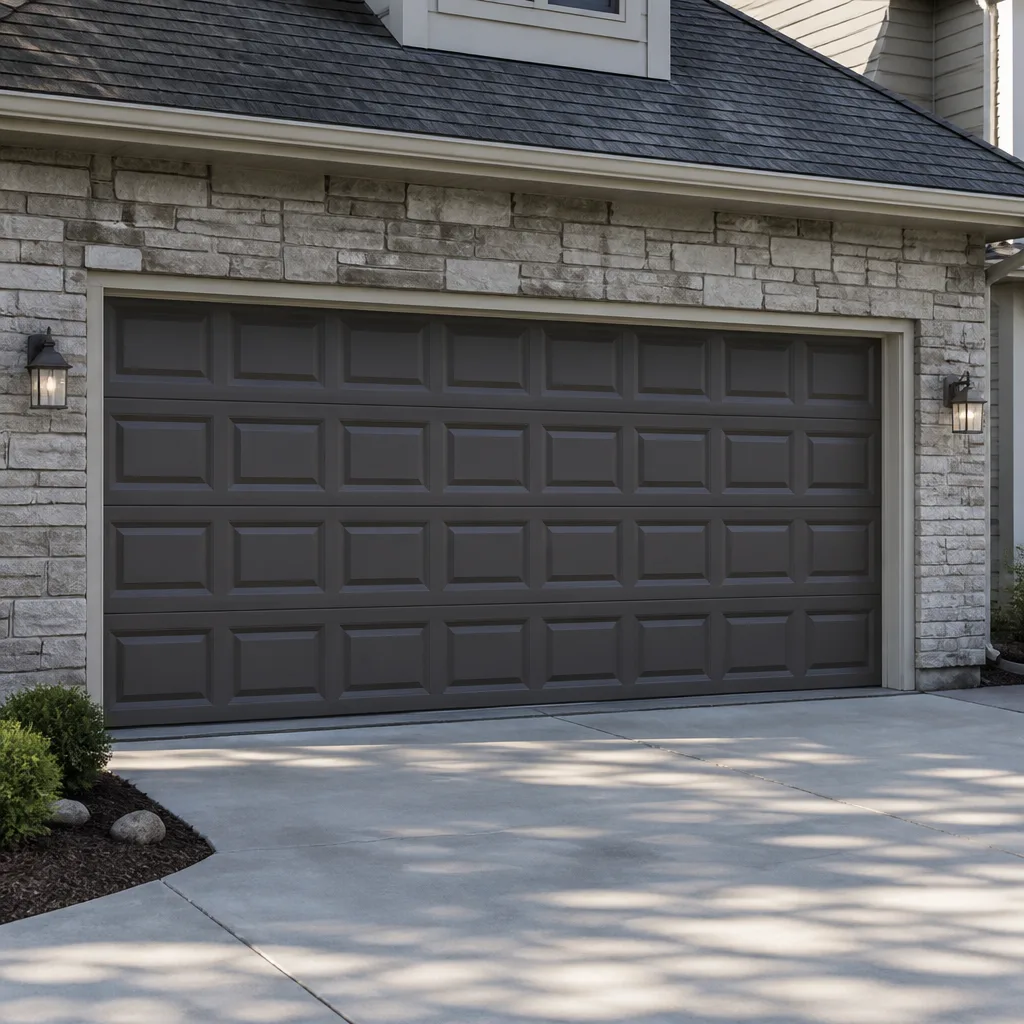
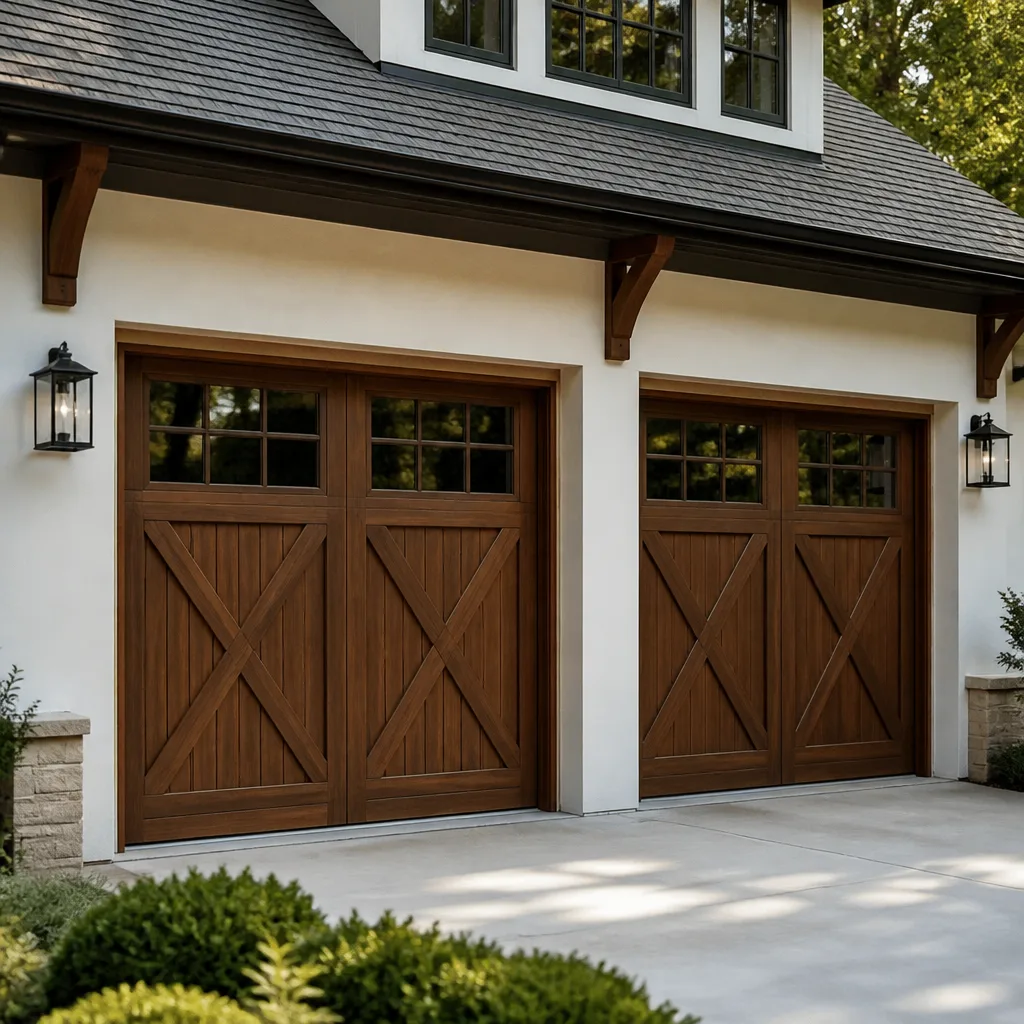
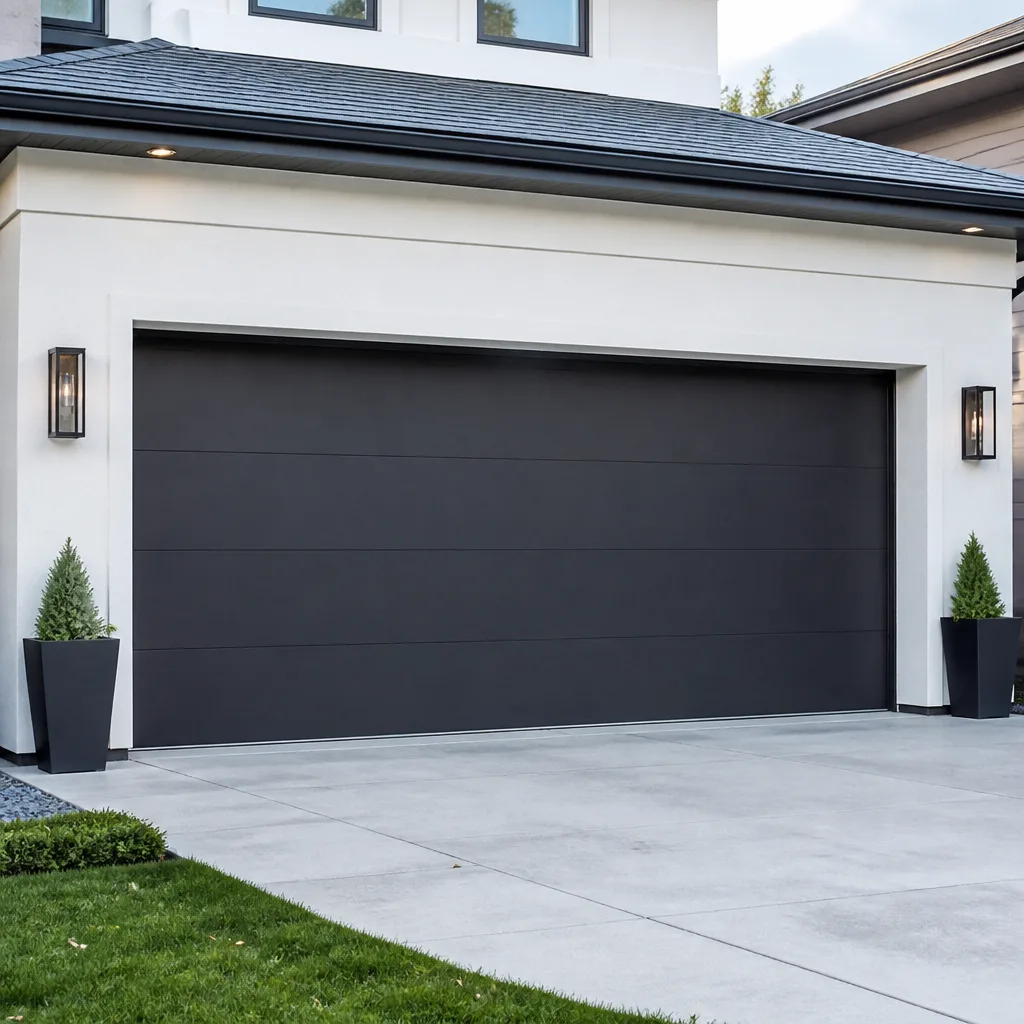
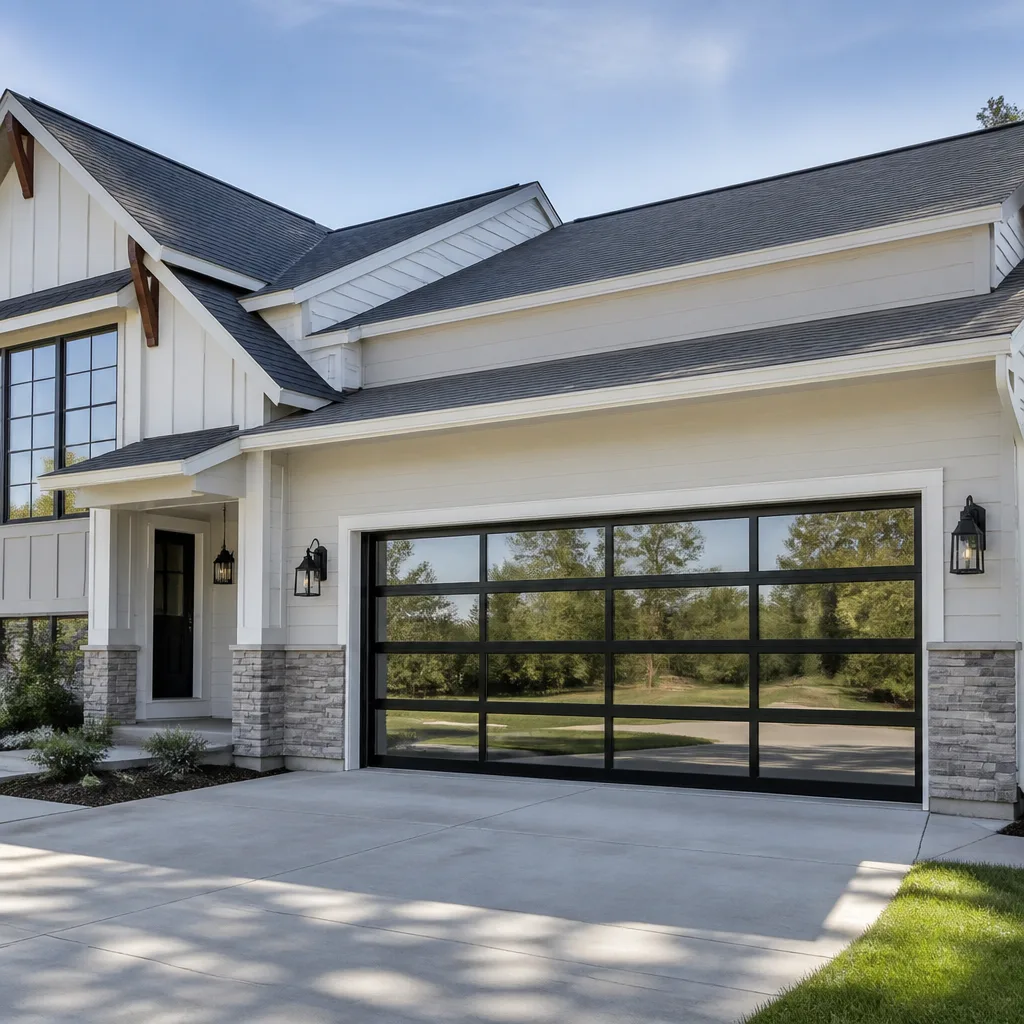
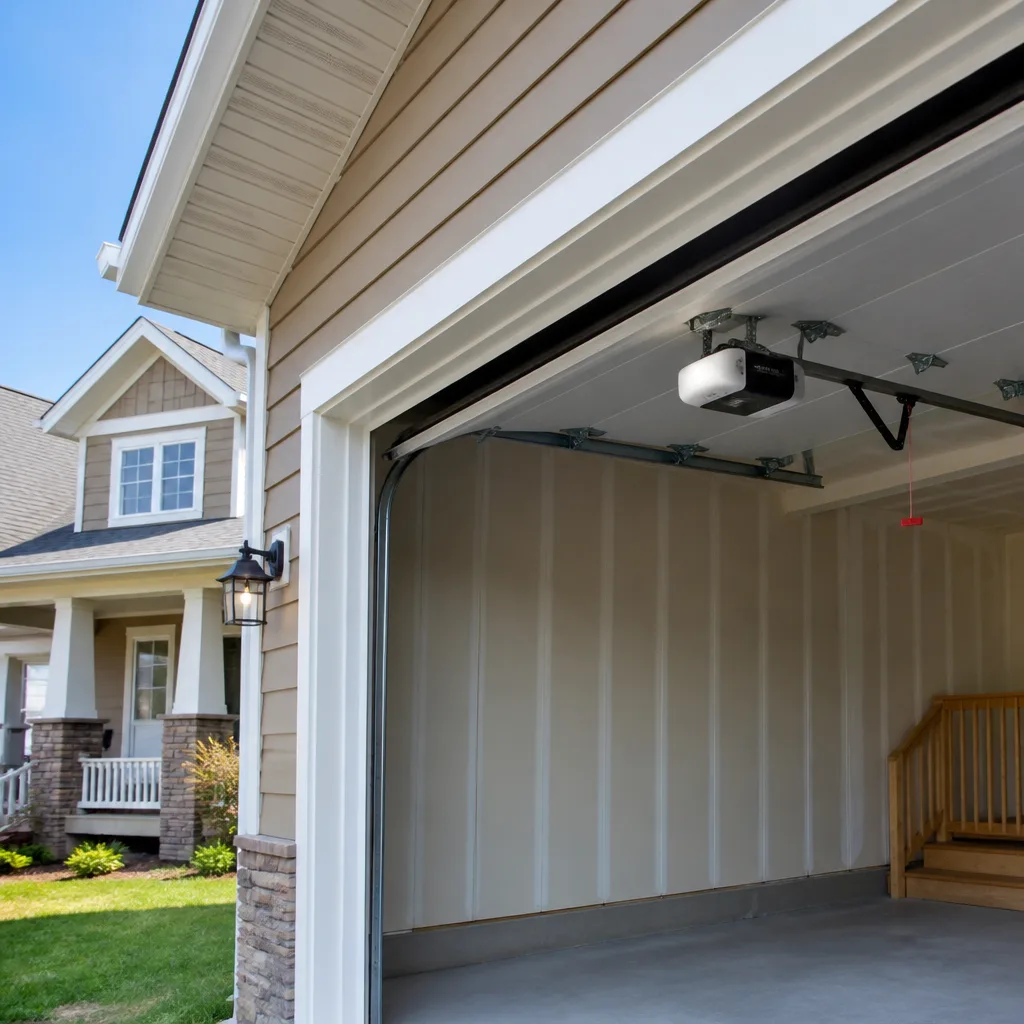
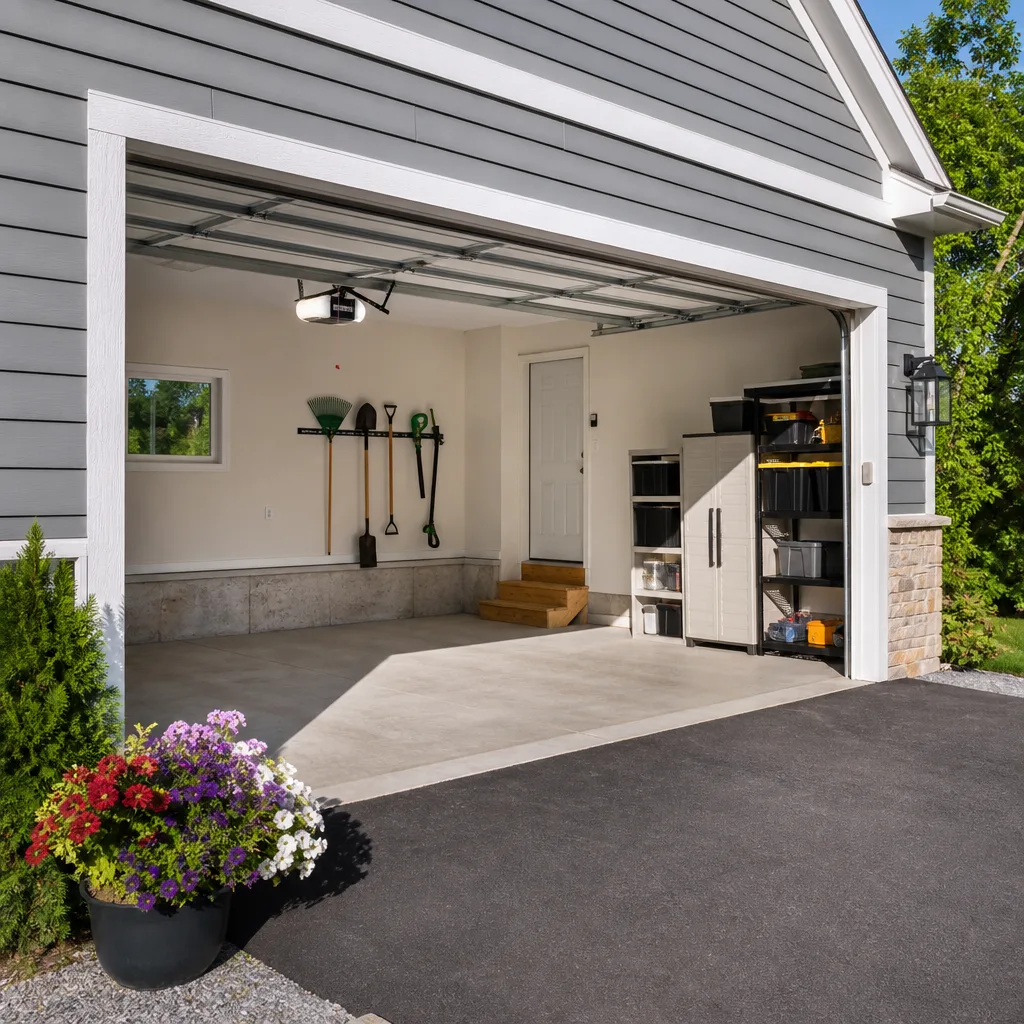
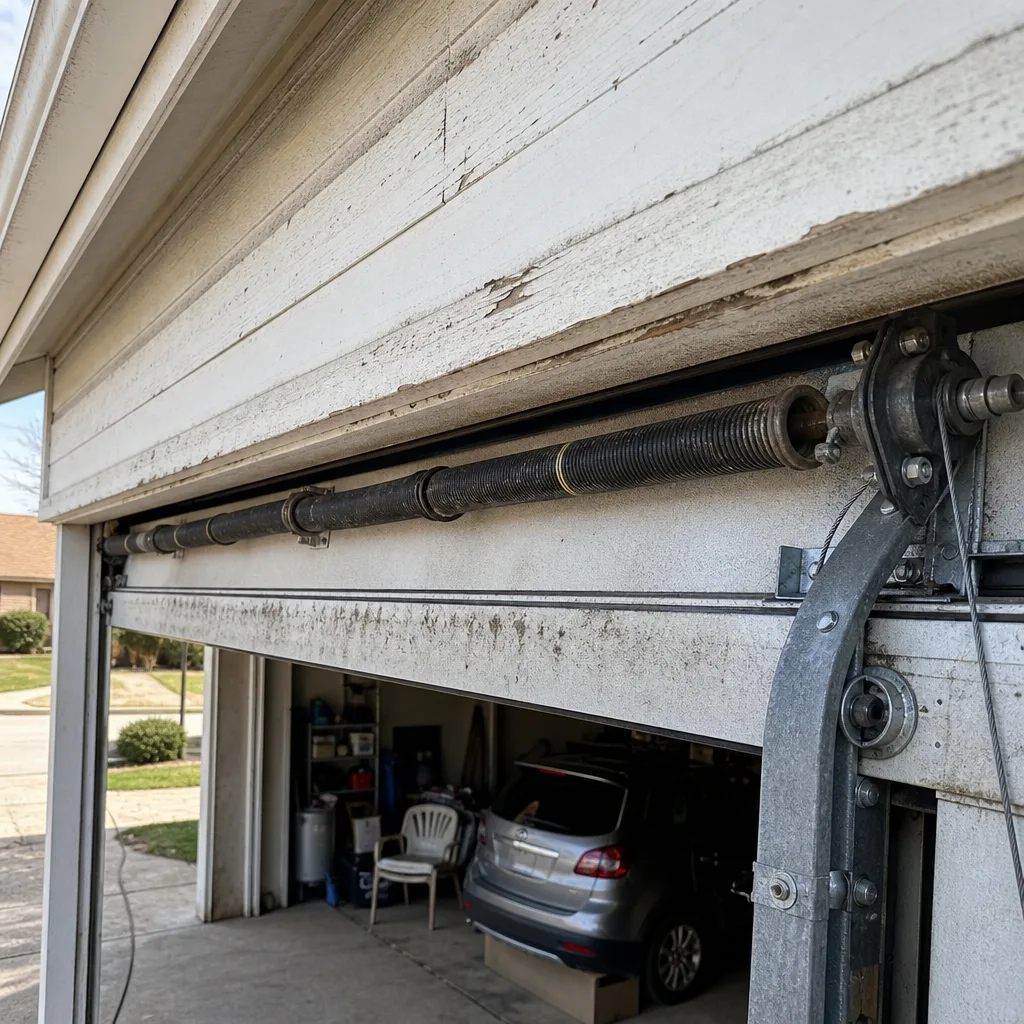 Before
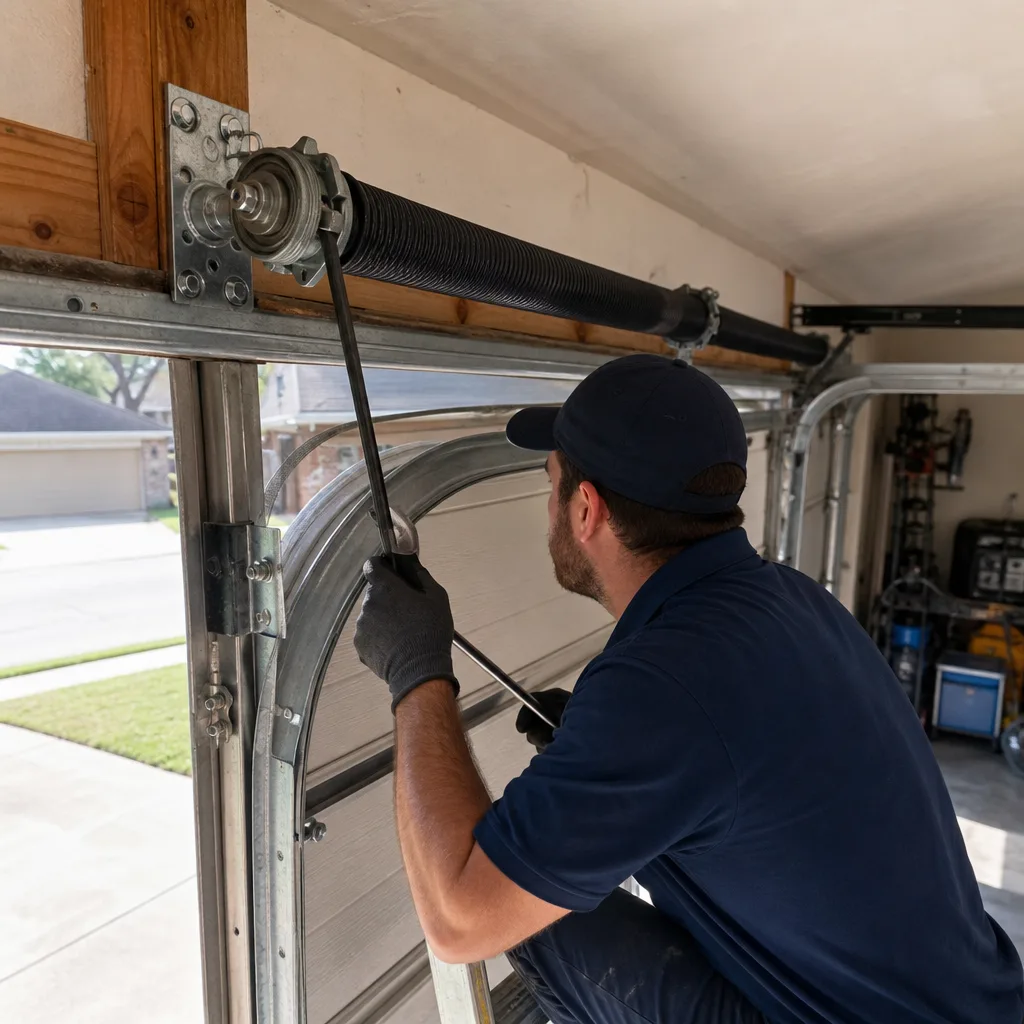 After
After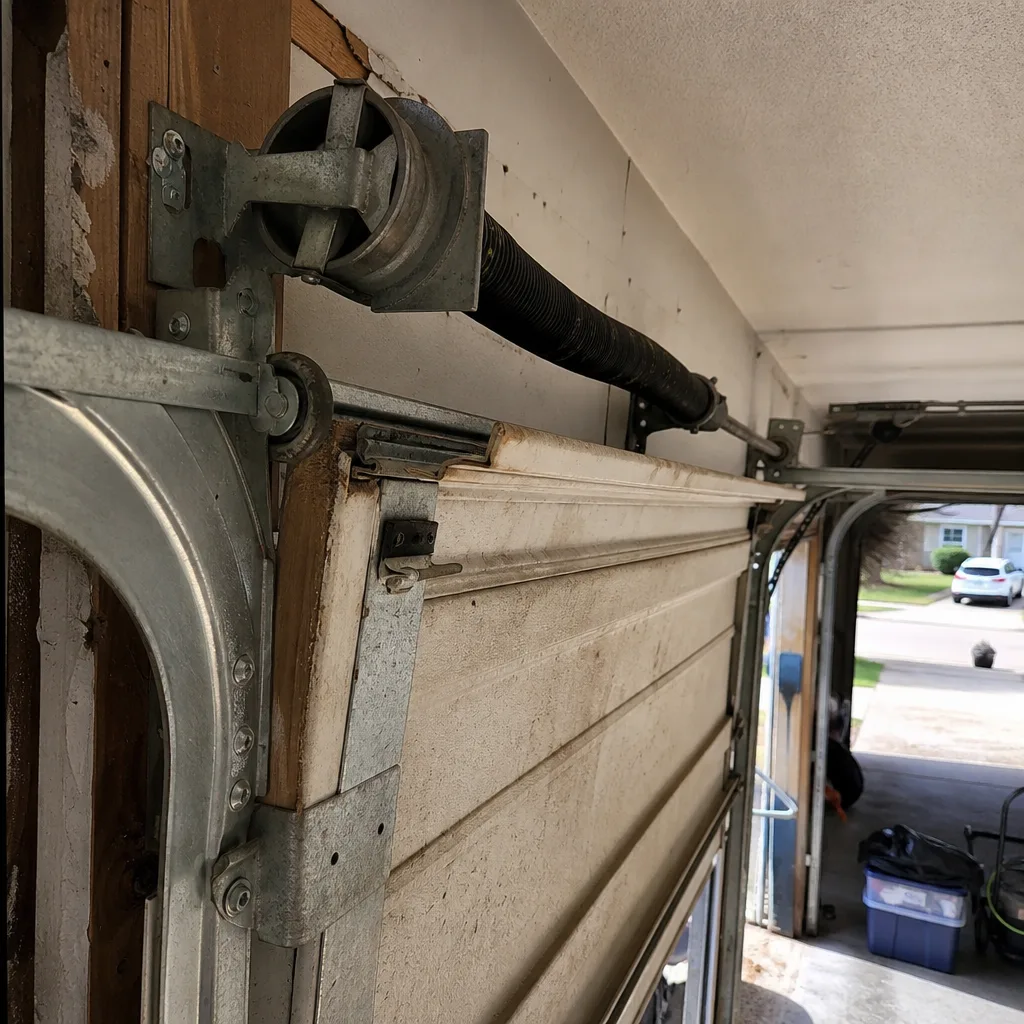 Before
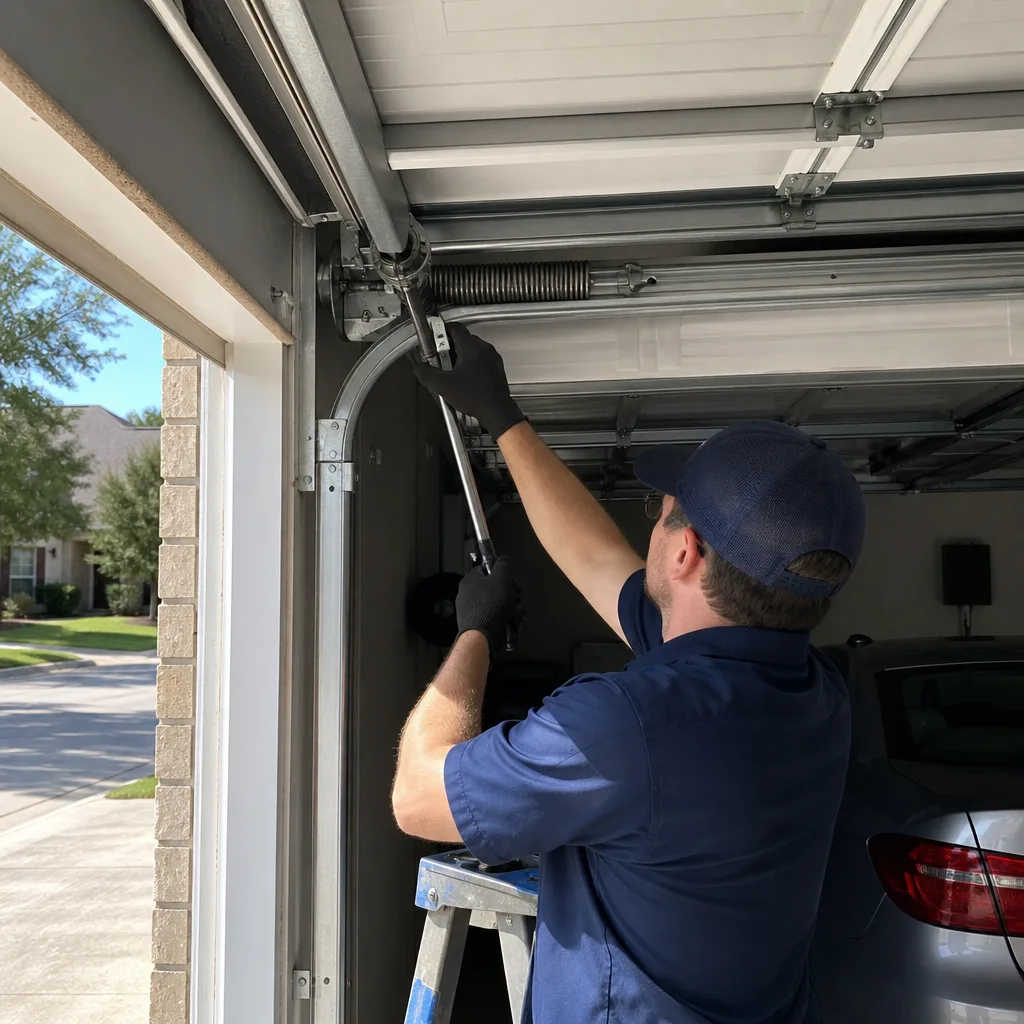 After
After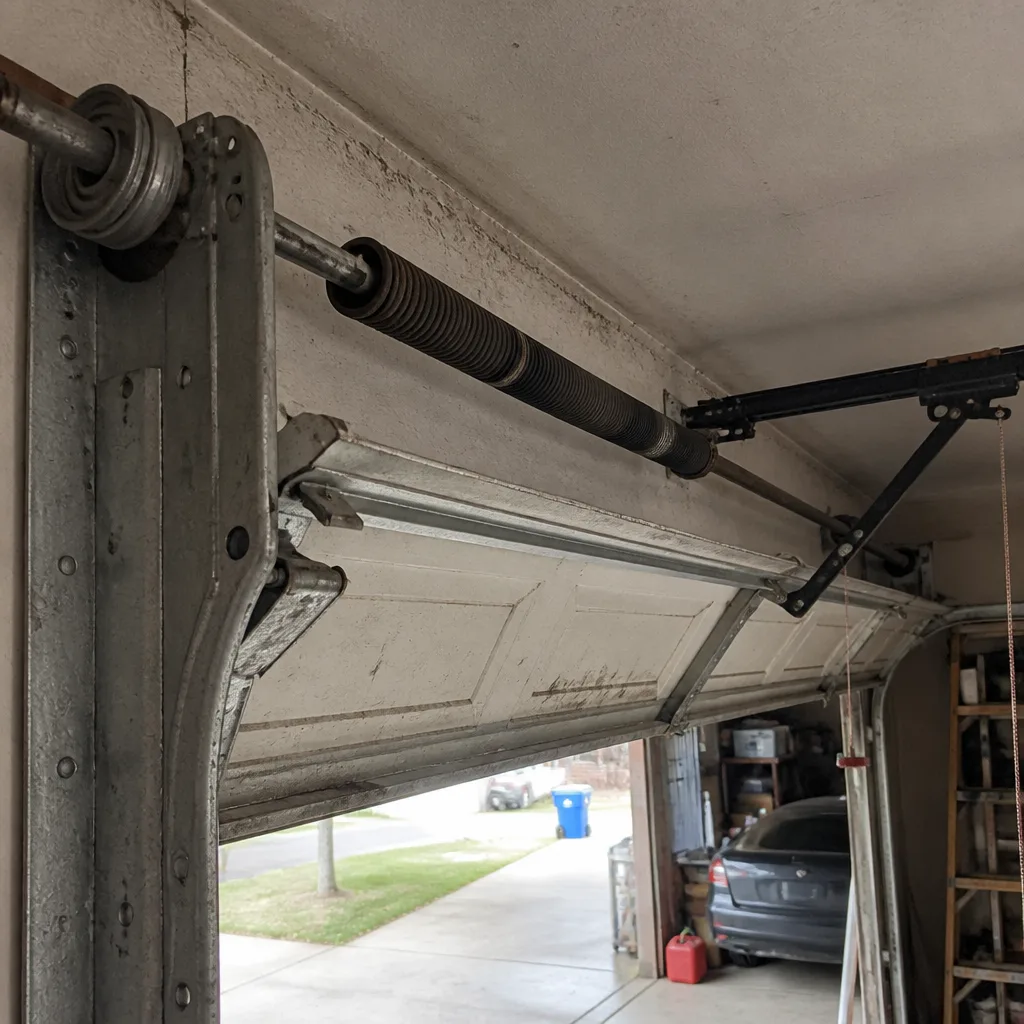 Before
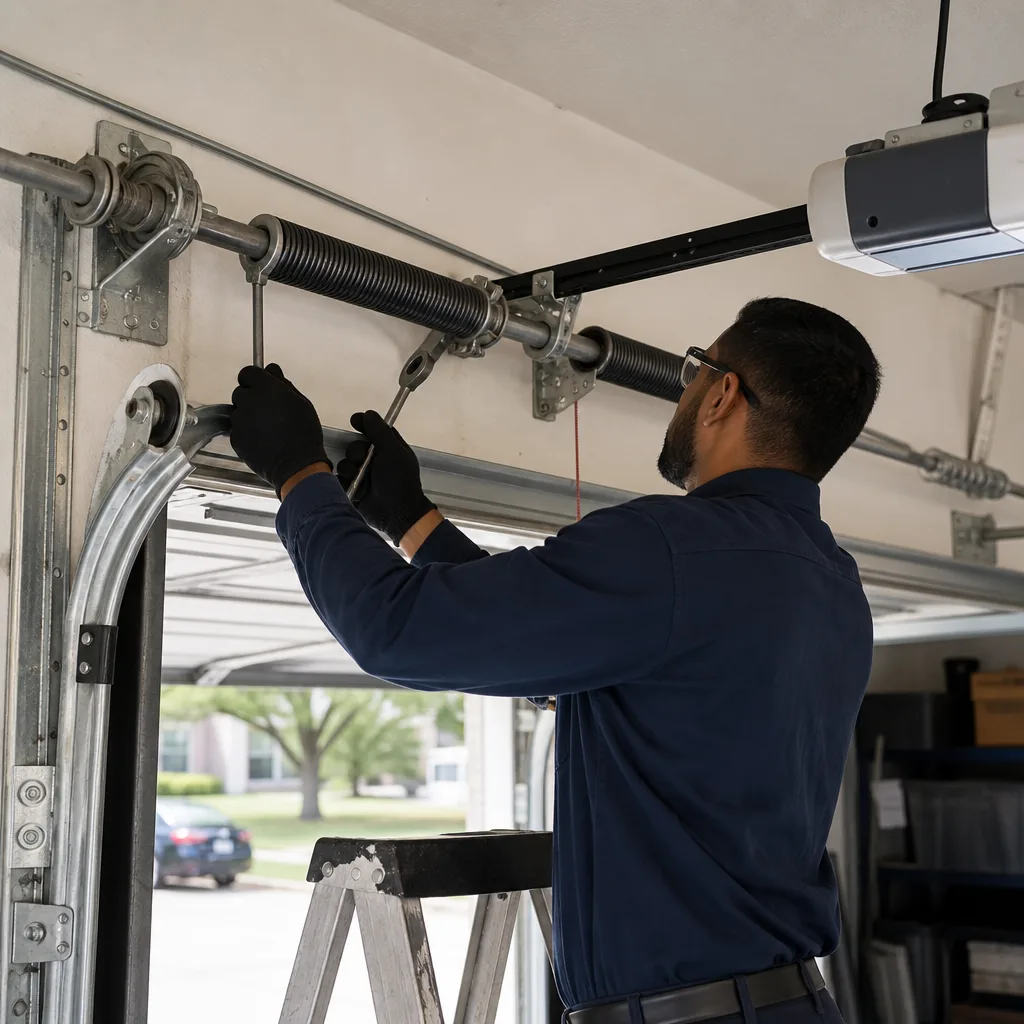 After
AfterThe Complete Guide to Garage Door in Carrollton
Your garage door moves roughly 1,500 times a year. That’s more mechanical cycles than almost anything else in your house, and most people can’t name a single part inside it. In Carrollton, where summer afternoons push past 100°F and west-facing doors bake in direct sun, that ignorance gets expensive. This guide gives you the straight picture: what’s actually inside that 200-pound door, what North Texas heat does to it, what builders skip, and how to make a decision before the thing refuses to open at 7 a.m. on a Monday.
Quick Answer
A garage door in Carrollton is a system of roughly 100 parts working together, and the two most likely to fail are the torsion springs (rated for about 10,000 cycles, or 7 to 10 years of normal use here) and the cables. Most homeowners can avoid a crisis by doing a five-point visual check twice a year, replacing builder-grade hardware before it fails, and calling a local Carrollton shop for a free second opinion before signing any big-box installer’s contract.
Table of Contents
- How a Garage Door System Actually Works
- What North Texas Heat Does to Your Door That No National Guide Mentions
- Door Materials That Hold Up in Carrollton (And Ones That Warp in Five Years)
- The Five-Point Driveway Check: Read Your Door Without Touching It
- What Builder-Grade Installs Leave Out (And What It Costs You by Month 18)
- The Real Lifespan Math: Cost Per Year of Quality vs. Builder-Grade
- Springs, Cables, and Why You Should Never Touch Them Yourself
- The Opener Is Almost Never the Problem
How a Garage Door System Actually Works
Most people think their garage door opener does the heavy lifting. It doesn’t. The opener is a small electric motor that moves a trolley along a rail. The real work is done by the springs, which counterbalance the door’s weight so the opener can move it with minimal effort. Here’s the full cast of parts, in order of how likely they are to fail in Carrollton:
- Torsion springs – mounted above the door on a steel shaft. They store mechanical energy and do about 90% of the lifting. Every cycle of the door winds and unwinds them one full turn. They fatigue with use, not age, and Carrollton’s heat accelerates the metal fatigue.
- Lift cables – aircraft-grade steel cables that run from the bottom brackets up to the spring shaft. They carry the door weight when springs are doing their job. When a spring breaks, cables snap within weeks because they suddenly carry the entire load.
- Rollers – nylon or steel wheels that ride in the vertical and horizontal tracks. Nylon rollers wear out faster in heat; steel rollers get noisy and grind the track.
- Hinges – the door sections pivot on these. They’re the most under-lubricated part on almost every door in Denton County.
- Tracks – the steel channels that guide the rollers. They rarely fail on their own. They fail when a spring breaks and bends them, or when a car taps the bottom panel and knocks the track out of plumb.
- Opener – the motor, belt or chain, and logic board. It fails last, and when it does, the symptom is usually a door that runs fine but won’t move. More on that below.
We’ve been inside thousands of Carrollton garages since 2004. Here’s what we see: the door itself, the big square panel, is almost never the weak point. The springs and cables are. They’re the parts that break, and they’re the parts nobody thinks about until the door won’t lift. If you want the deeper repair-specific breakdown, we wrote a dedicated page on Garage Door Repair in Carrollton that covers failure patterns in detail.
What North Texas Heat Does to Your Door That No National Guide Mentions
National garage door content gets written in places like Ohio and Michigan. It tells you springs last 10,000 cycles and wood doors warp when they get wet. None of that maps cleanly to Carrollton. We get 90+ days above 95°F most summers, and a west-facing garage door in the Castle Hills or Rosemeade area can hit 140°F on the panel surface by 4 p.m. That heat doesn’t just sit there. It works on the door.
Here’s what we’ve documented over two decades in this specific climate:
- Spring fatigue accelerates. Torsion springs are heat-treated steel under constant tension. Heat increases the rate of metal fatigue, so a spring rated for 10,000 cycles in a mild climate often gets 7,000 to 8,000 here before it snaps. That’s the difference between replacing springs at the 7-year mark and replacing them at the 10-year mark. The national guides won’t tell you that.
- Nylon rollers degrade faster. Nylon picks up heat, softens slightly, and wears against the track. We see roller replacement needs at 5 to 7 years in Carrollton versus 8 to 10 in cooler climates.
- Weatherstripping and seals turn brittle. The vinyl bottom seal and side seals on a west-facing door can crack and split within three summers. That lets dust, rain, and in July, a lot of heat into the garage. It also lets critters in. Carrollton has a robust rat and mouse population, and a split bottom seal is a welcome mat.
- Panel color fades unevenly. Dark paint colors on west-facing doors absorb more heat and fade faster. A dark brown door that looked sharp in 2020 looks sun-bleached and chalky by 2025. Lighter colors and factory-finished steel hold up better.
The takeaway isn’t that you should buy a different door. It’s that you should set your maintenance calendar to Carrollton’s weather, not a national average. Check your door in May, before the heat builds, and again in October, after it breaks.
Door Materials That Hold Up in Carrollton (And Ones That Warp in Five Years)
Not all garage door materials are equal in North Texas. The big-box stores carry the same handful of brands, but their stock models are often spec’d for northern climates. Here’s the material-by-material reality we’ve learned installing doors in Carrollton since 2004:
Steel (best overall): Factory-finished galvanized steel, especially in the 24- to 26-gauge range, holds up well in North Texas heat. It resists warping, doesn’t absorb moisture, and the paint finish lasts 8 to 12 years on east- and north-facing doors. On west- and south-facing doors, expect 6 to 8 years before repainting. Brands like Amarr and Clopay make solid steel lines that handle our heat well. We install more steel doors than anything else, and for good reason.
Aluminum (good for specific situations): Aluminum is lighter and resists rust, which matters if your garage traps humidity. But it dents easily, and in a hailstorm, an aluminum door looks like a golf ball when the sun hits it right. Carrollton gets hail. If you go aluminum, get a heavier gauge and expect some dings over the years.
Wood (high maintenance, high reward): A real wood door, like a cedar or redwood carriage house door, is gorgeous. It’s also the highest-maintenance option in our climate. Carrollton’s summer heat pulls moisture out of wood, causing it to shrink, crack, and split. Winter rains put it back. That expansion and contraction cycle means a wood door here needs sanding and resealing every two years, minimum, or it warps visibly within five. We install them for people who truly want that look and understand what they’re signing up for. Most people don’t.
Fiberglass (avoid on west-facing): Fiberglass doors can look like wood without the maintenance, but they have a known issue in hot climates: the resin yellows over time, especially under direct sun. A west-facing fiberglass door in Carrollton can look aged and amber-toned within three years. If your door faces west or south, steel is the safer bet.
Vinyl-backed steel (the smart middle): If you want low maintenance and good insulation, look at a steel door with a vinyl backer, sometimes called a “sandwich door.” These are heavier and hold up well, and the insulation matters in August when your garage turns into an oven. Wayne Dalton and Raynor both make good insulated lines. The upcharge is real, but so is the difference on a July afternoon.
If you’re ready to replace, we have a full breakdown on our Garage Door Installation in Carrollton page that covers sizing, insulation, and what a quality install should include.
The Five-Point Driveway Check: Read Your Door Without Touching It
You don’t need to be a technician to spot most problems before they become emergencies. Here are the five things you can see from your driveway that tell you the true condition of your door. No touching, no tools, no climbing on anything.
- The spring gap. Look at the torsion spring above the center of the door. If it’s broken, you’ll see a visible gap where the coil has snapped. That gap is usually an inch or two wide, and once you’ve seen it, you’ll never unsee it. If you see a gap, the door is 200 pounds of dead weight and the opener will not lift it. Do not try.
- The cable condition. Look at the cables on both sides of the door, running from the bottom corners up to the top. They should be tight and straight. If one looks frayed, fuzzy, or has individual wire strands poking out like a bottle brush, that cable is close to failure. A cable snapping under tension sounds like a gunshot and can whip a bracket clean through drywall.
- The roller wear. Look at the rollers where they ride in the track. If they’re steel and you can see flat spots or shiny wear marks, they’re grinding. If they’re nylon and the outer ring is missing or cracked, they’re done. Rollers should spin freely, not slide.
- The door’s posture. From the driveway, sight down the top edge of the door. It should be level and the gaps on each side should be roughly even. If one side hangs lower, or one side has a gap twice the width of the other, something in the spring or cable system is unbalanced. That imbalance is what kills springs early.
- The seal and panel base. Crouch down and look at the bottom seal. If it’s cracked, split, or missing chunks, you’re losing conditioned air and inviting pests. While you’re down there, run your eyes along the bottom panel for rust or dents. Bottom panels sit closest to ground moisture and are the most common spot for rust-through on older Carrollton doors.
Do this twice a year. Five minutes. You’ll know more about your door than 95% of your neighbors, and you’ll catch a $200 spring replacement before it becomes a $700 opener repair plus a bent track plus a day without your car.
What Builder-Grade Installs Leave Out (And What It Costs You by Month 18)
Most Carrollton homes built in the last 15 years came with a builder-grade garage door. It works on day one. It looks fine on the walkthrough. Here’s what you don’t see:
- Single springs instead of dual. Builders often install one large-tension spring instead of two smaller ones. A single spring is cheaper and faster to install. It also fails earlier and when it fails, the door drops hard on one side, which twists the section hinges and bends the track. Dual springs cost about $50 more at the time of install. The builder saves $50; you pay $400 later.
- Thin-gauge steel. The builder-spec door is often 27- or 28-gauge steel, which is noticeably thinner than the 24-gauge we install on replacements. Thinner steel dents more easily, transmits more heat, and transmits more noise. You can feel the difference by pressing on the center of a panel with your thumb. If it flexes like a cookie sheet, that’s builder-grade.
- No thermal break. A thermal break is a piece of insulation material between the outer steel skin and the inner frame. It prevents heat from conducting straight through the metal. Builder-grade doors often skip it, which means your garage gets noticeably hotter in Carrollton summers, which means the room above the garage gets hotter, which means your AC works harder. Every month.
- Basic hinges and rollers. The cheapest hardware available. Steel rollers with no bearings that grind, squeak, and bind. They’ll last a few years, but they make the whole door sound like it’s in pain.
- The opener is undersized. Builders install whatever opener is cheapest, often a 1/2 horsepower chain drive. On a standard 16×7 door, that’s marginal on day one. Two years later, with worn rollers and dirt in the tracks, it struggles. A 3/4 horsepower belt drive would have lasted a decade. You get to buy that one yourself.
None of this is a defect in the builder’s work. It’s just the target price point. The problem is that most people don’t know the door they got on closing day has a built-in expiration date, and that date usually lands between month 12 and month 24. If your home is in that window, do the five-point check above, and if anything looks off, get a second opinion before the original hardware fails. Our Otto’s Garage Door home page has the full rundown on how our second-opinion process works. We price it free, in writing, out of our own pocket, because a homeowner who gets a straight answer today is a customer for 20 years.
The Real Lifespan Math: Cost Per Year of Quality vs. Builder-Grade
Here’s the number that matters, and it’s the one no national guide will give you for Carrollton specifically. A quality 16×7 steel garage door, properly installed with dual springs, insulated panels, and good rollers, costs between $1,800 and $2,800 installed in the Carrollton market. A builder-grade replacement from a big-box installer runs $800 to $1,200 installed. The builder-grade door looks cheaper on paper. Per year, it’s not.
A quality door from a line by Amarr or Wayne Dalton, installed correctly, will last 20 to 25 years in North Texas with basic maintenance. That means springs at year 7 to 8, rollers at year 8 to 10, and maybe new weatherstripping three times. Total cost over 22 years: roughly $2,300 for the door plus $600 in parts, or about $132 per year. The builder-grade door lasts 8 to 10 years before rust, warpage, or a failed section makes replacement the sensible option. Same math: about $1,000 for the door plus two spring replacements and a track repair at $500, or about $1,700 total over 9 years, or $189 per year. The “cheaper” door costs you more per year, every year, plus three more days of hassle, plus a hotter garage the entire time. You can have the cheaper door replaced twice for the cost of doing it right once. Or you can do it right once and spend your summers doing something besides waiting for a garage door truck.
If you want a deeper cost breakdown, including what drives the price swings in our market, we wrote a full Carrollton-specific piece on Garage Door Installation in Carrollton that covers material pricing, insulation options, and what to expect from a straight quote.
Springs, Cables, and Why You Should Never Touch Them Yourself
A garage door spring holds enough tension to lift 200 pounds of steel. When it snaps, it releases all that energy at once. In a loose spring, that energy goes into the air. In a spring that’s still under tension, like the ones mounted on your wall, that energy goes into whatever is holding it, and if that’s your hand or your eye, the story ends at the hospital. Every year, we get called to Carrollton homes where someone tried to save $150 by replacing their own spring. It’s the same story every time: a wrench slips, a winding bar snaps back, and a hand gets broken or a face gets split open. The hospital bill is $1,400 before you even get to the door.
Here’s what you can do safely: if the door is stuck closed and the spring is obviously broken (you can see the gap), don’t pull the emergency release and try to muscle the door up. That 200-pound door will win, and it will hurt you or fold the door sections. If the door is stuck open and a cable has snapped, don’t try to move it. A door hanging by one cable is under sideways load, and the remaining cable can snap at any second. The right move is to leave it, keep kids and pets away, and call someone who does this every day. Otto Reinhardt has been fixing garage doors in Carrollton since 2004, and he’ll quote the job on the phone and hold that number when he pulls up. That’s how it should work.
The Opener Is Almost Never the Problem
This is the single most common thing we teach Carrollton homeowners who call us thinking they need a new opener. The symptom is simple: the door won’t go up, or it goes up a few inches and stops, or it strains and grinds. The assumption is the opener failed. Here’s the reality: if the opener is straining, the problem is almost never the opener. The opener is a small electric motor attached to a door that the springs are failing to counterbalance. When the springs lose tension, the door gets heavy. The opener works harder and harder until it either trips its thermal overload or burns out the gear. The loud grinding noise people report before their opener “dies” is the sound of the door trying to pull itself apart.
So when a Carrollton homeowner calls us and says “I think I need a new opener,” Otto asks them to describe what they’re hearing. In about half the cases, the opener is fine and the springs are shot. Replacing the springs costs a fraction of a new opener and makes the original opener run like it’s brand new. In the other half, the opener genuinely has failed, usually the logic board or the gear. In either case, the right call is to diagnose what’s actually wrong before spending money. We wrote a separate deep-dive on Garage Door Opener in Carrollton that covers opener types, noise levels, and what a good opener replacement should cost in our market.
Common Mistakes to Avoid
- Lubricating with WD-40. WD-40 is a solvent, not a lubricant. It will clean the gunk off your springs and then evaporate, leaving them drier than they started. Use a white lithium grease or a dedicated garage door lubricant on the rollers, hinges, and springs. We’ve seen more than one homeowner turn a squeaky door into a binding door by reaching for the blue can.
- Ignoring a squeal or pop. A garage door that’s getting louder is trying to tell you something. The “pop” of a spring snapping is distinctive, but the weeks before it, most doors give off a grinding sound as the spring loses tension. If your door sounds different than it did last month, pay attention.
- Painting over rust without treating it. Rust on the bottom panel of a steel door isn’t a paint problem, it’s a moisture problem. Painting over it without addressing the source means the rust eats through from underneath and the panel fails anyway. You need to treat the rust, seal the panel, and re-secure the bottom seal.
- Assuming the door is balanced because it stays up. A properly balanced door will hold its position halfway open without support. If yours creeps down or needs help staying up, the springs are fading and the opener is doing all the work. That’s the early warning sign people ignore.
- Buying parts from an online discounter. We see it constantly in Carrollton: someone buys a $40 spring kit online because it’s cheaper. The spring is the wrong size, the hardware is zinc-plated instead of galvanized, and the instructions are one page of generic warnings. They end up calling us anyway, but now the door is jammed and they’re out the $40 plus our trip charge. Buy springs from a local shop that knows what fits your exact door.
- Letting a big-box store subcontract the install. The big-box stores don’t install doors. They sell you the door and hand your job to a subcontractor who may be running three jobs that day. If something goes wrong, the store blames the sub, the sub blames the store, and you’re stuck in the middle with a door that doesn’t work. Ask who is actually showing up at your house before you sign.
When to Call a Professional
Some jobs are DIY. Changing a light fixture, swapping a faucet, painting a room. Garage doors are not one of those jobs. The springs alone can kill you, and the door itself can crush whatever gets under it. Call a trained professional when the spring is broken, when a cable has snapped, when the door is off its tracks, when the bottom section is rusted through, or when the door has been hit by a car and the track looks bent. Those are not judgment calls. Those are “leave it alone and get someone who does this every day” calls.
If you’re not sure whether your situation is dangerous or just annoying, call us and describe what you’re seeing. Otto or someone from his crew will give you an honest read over the phone and tell you whether it can wait until next week or needs attention today. Garage Door Repair in Carrollton is what we do every day, and we offer free estimates, quoted before we arrive and honored at the door. Call (945) 445-8489 and a person will answer, day or night.
Frequently Asked Questions
In Carrollton’s heat, a standard torsion spring lasts 7 to 10 years, or roughly 7,000 to 8,000 cycles, before metal fatigue causes it to snap. A spring rated for 10,000 cycles in a cooler climate often fails earlier here because sustained high temperatures accelerate the fatigue. If your door is over 7 years old and still has original springs, start budgeting for their replacement. Call (945) 445-8489 and we’ll give you a straight quote over the phone.
Factory-finished galvanized steel in a lighter paint color is the best material for west- and south-facing Carrollton garages. It resists warping and fading better than fiberglass or dark-painted wood, and it doesn’t absorb the heat the way a darker door does. Avoid fiberglass on west-facing doors; the resin yellows under direct North Texas sun within a few years. For the full breakdown of materials, see our Garage Door Installation in Carrollton page.
A quality 16×7 steel garage door, properly installed with dual springs and insulated panels, runs between $1,800 and $2,800 in the Carrollton market. A builder-grade replacement from a big-box installer costs $800 to $1,200 installed, but per year of service, the quality door is cheaper. We quote every job in writing before work starts, and that number doesn’t change when we get to your driveway. Call (945) 445-8489 for an exact quote.
No. Garage door springs are under enough tension to seriously injure or kill you if a tool slips or a winding bar kicks back, and we’ve seen the results in Carrollton homes where the $150 savings became a $1,400 hospital bill. This is the one repair that should always go to a trained professional with the right tools and experience. Our spring replacements are covered by the 90-Day Done Right Promise in writing.
If your opener is straining, the problem is almost never the opener. What you’re hearing is the motor working against a door that’s no longer counterbalanced because the springs have lost tension. Replacing the springs usually makes the original opener run like new, and it costs a fraction of a new opener. If the opener genuinely has failed, the diagnosis should come before any spending. We covered this in depth on our Garage Door Opener in Carrollton page.
We do. Every estimate from Otto’s Garage Door is free, quoted before the visit, and held at the door with no surprise add-ons. We also offer a Free Second Opinion on any written estimate, no trip charge inside the county, plus a permanent 10% discount for seniors and veterans. Call (945) 445-8489 and a live person will answer.
The Bottom Line
Your garage door is the largest moving mechanical system in your house, and in Carrollton, it works harder than doors in most of the country. The heat ages springs faster, the sun fades and warps the wrong materials, and builder-grade hardware has a built-in expiration date that most homeowners never see coming. The fix isn’t complicated: check your door twice a year, replace springs and cables before they fail, and buy quality hardware the first time. If you’re not sure what you’re looking at, call Otto. He’s been fixing doors in this county since 2004, he answers his own phone, and his name is on the truck, the invoice, and the work.
Written by Otto Reinhardt, Owner at Otto’s Garage Door, serving Carrollton since 2004.