
Last updated September 10, 2026
Full 25-point door and opener safety check with every visit - springs, cables, rollers, tracks, and your LiftMaster or Chamberlain opener included
You get a price before we start. It does not change when the truck arrives.
 Before
 After
After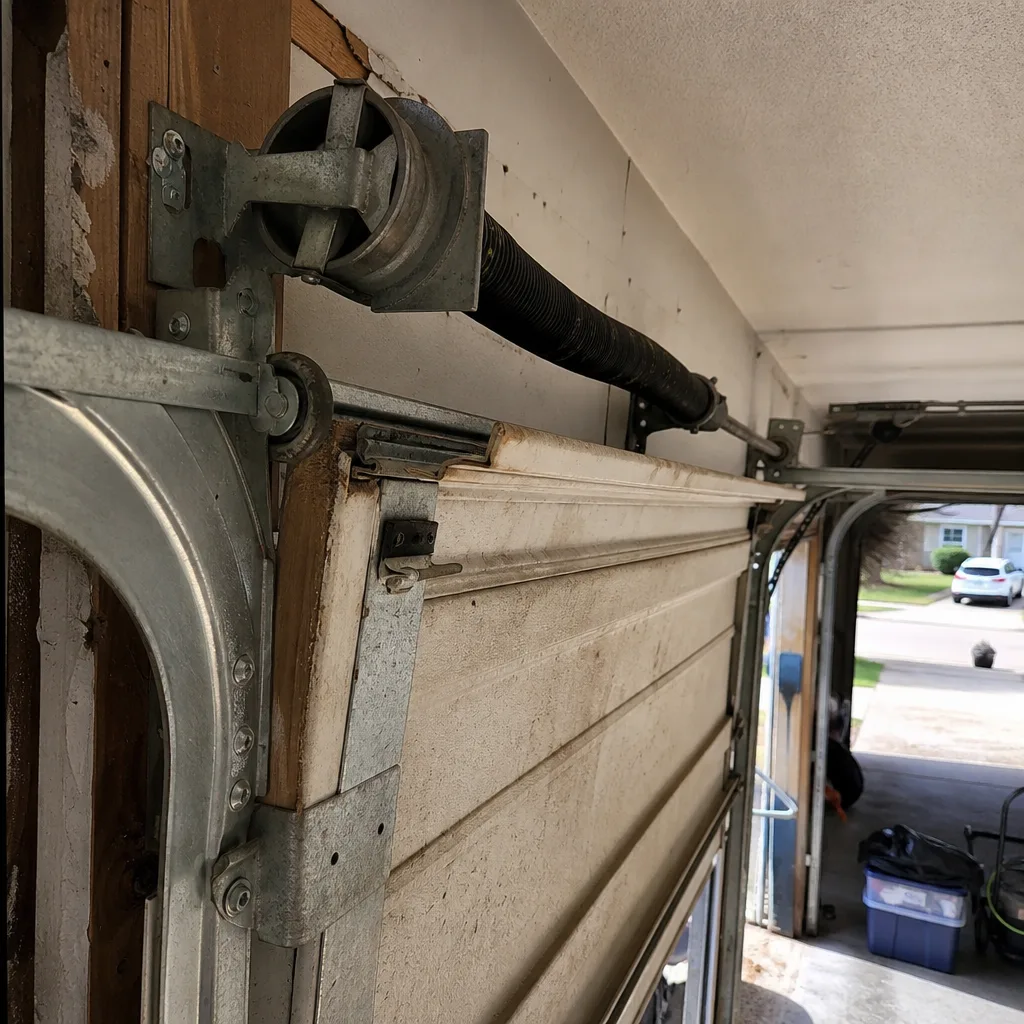 Before
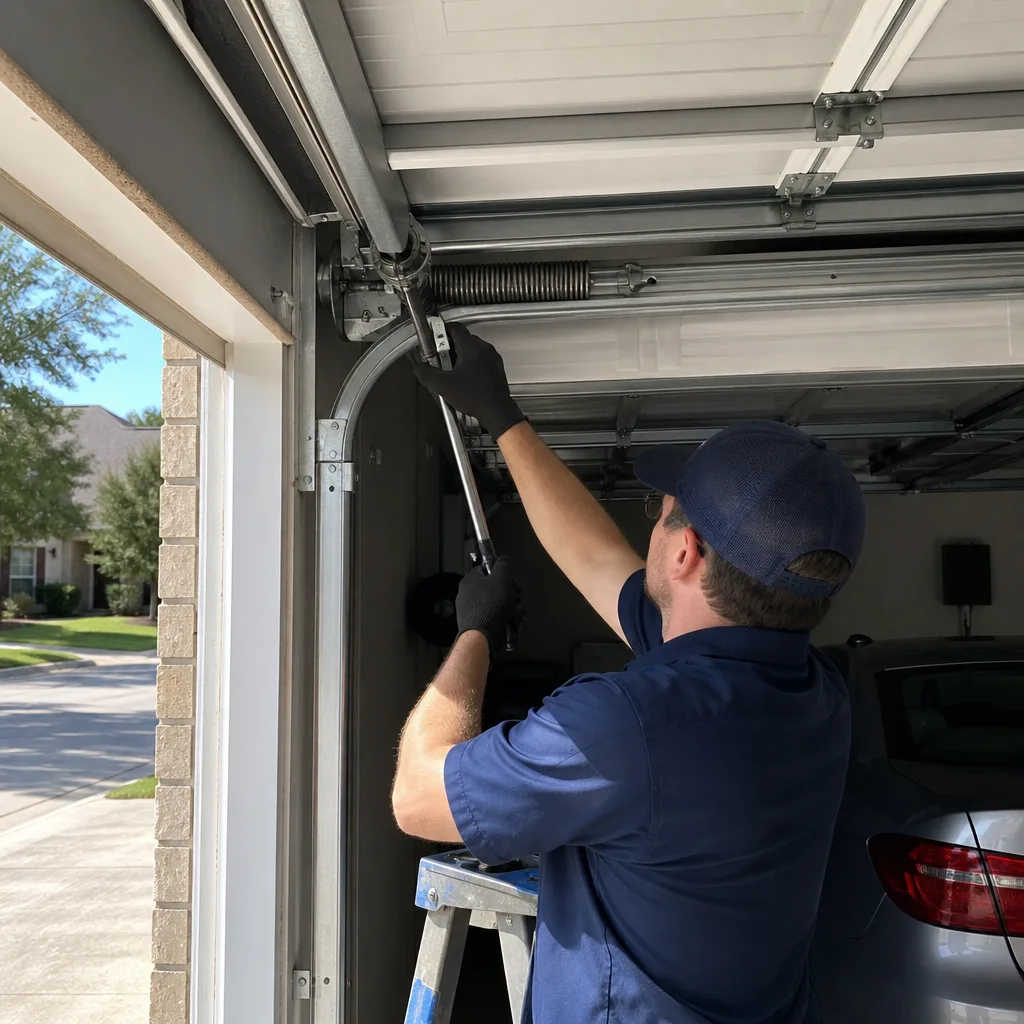 After
After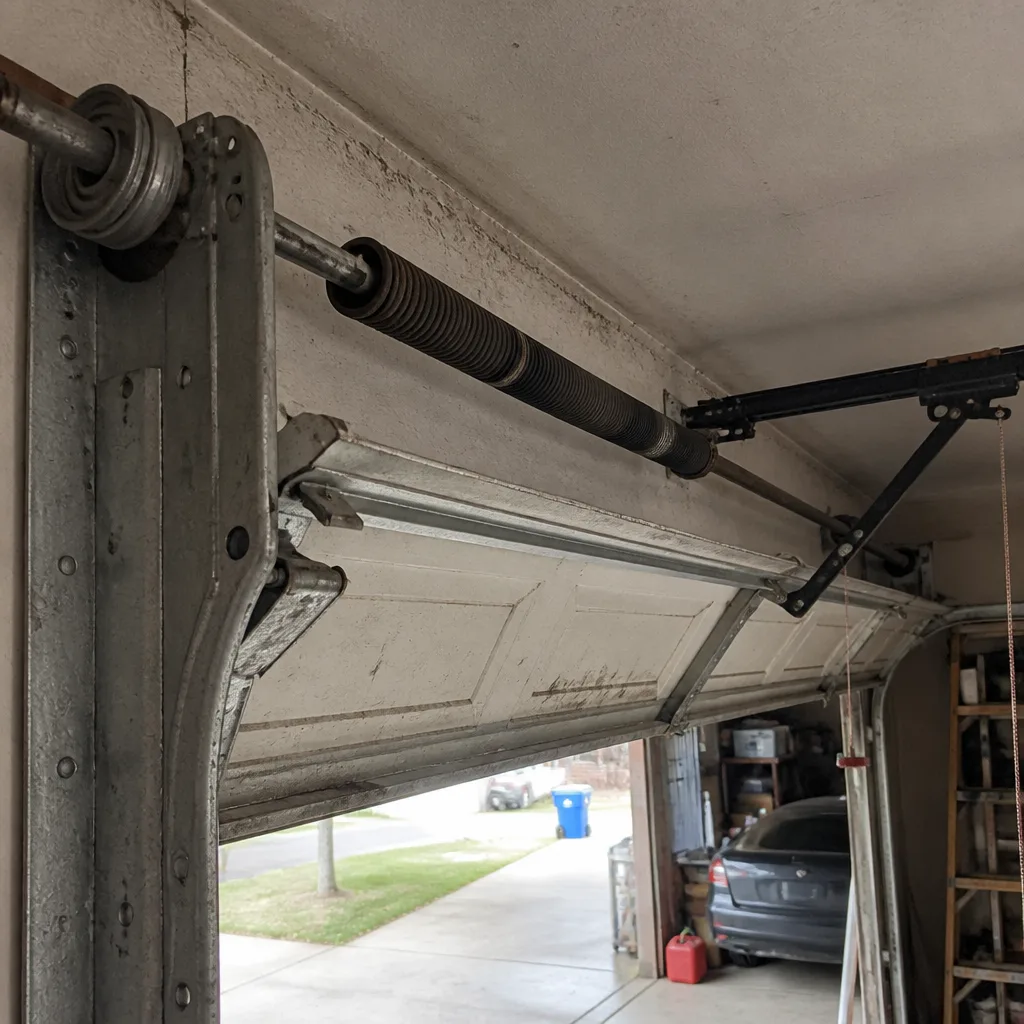 Before
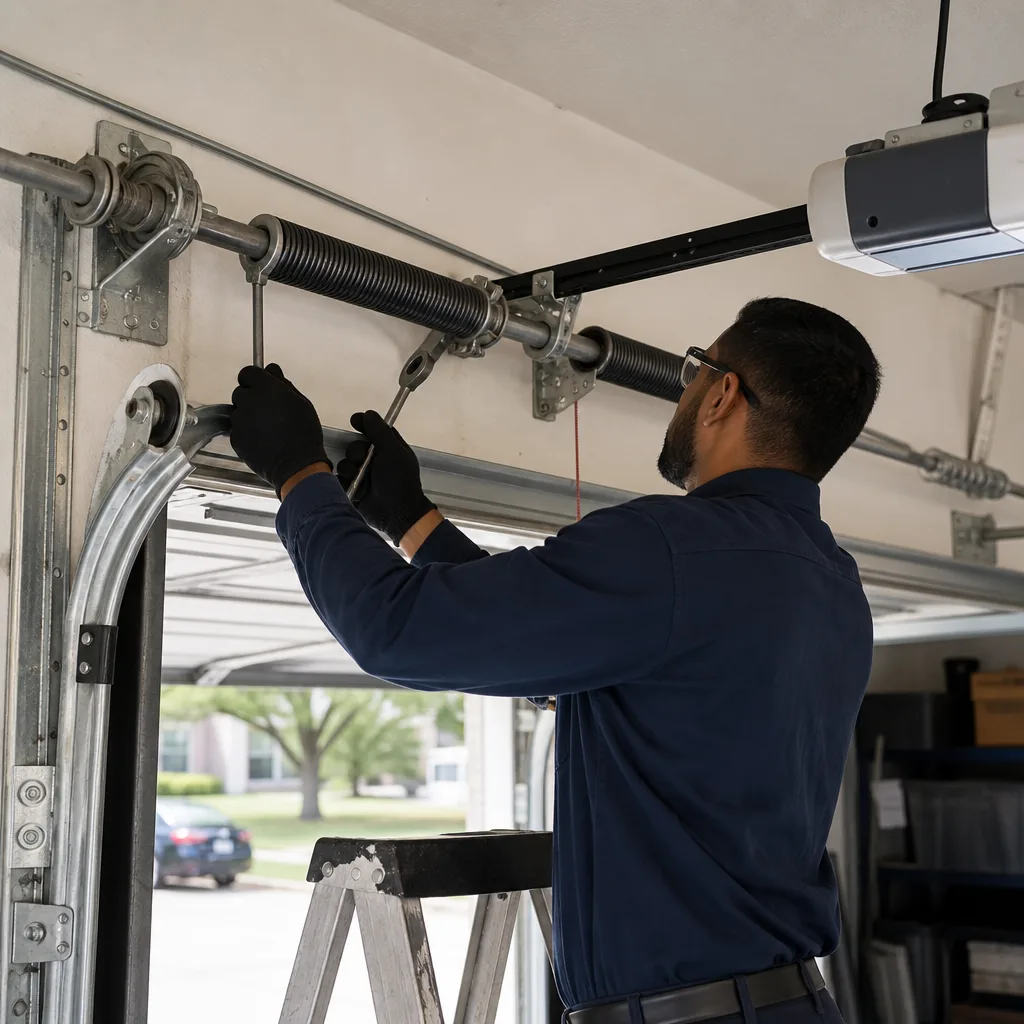 After
AfterSeasonal Garage Door Care for Carrollton: Year-Round Homeowner’s Guide
February 2021 left a lot of Carrollton garage doors with cracked bottom seals, snapped springs, and frozen tracks. The ice storm that rolled through North Texas didn’t discriminate, but here’s what most homeowners still don’t know: nearly every one of those failures was preventable with a fifteen-minute fall prep step. This guide walks you through exactly what your garage door endures across a full Carrollton year, from August heat that bakes the torsion springs to March pollen that gums up the tracks, and what to do about it before it costs you a service call. For The Complete Guide to Garage Door in Carrollton, see our deeper resource.
Quick Answer
Seasonal garage door maintenance in Carrollton means adjusting your routine four times a year: lubricate moving parts each spring and fall, check weatherstripping before summer heat and winter freezes, test the auto-reverse and balance monthly, and clean the tracks every March when pollen and construction dust peak. A homeowner who spends 20 minutes per season on these steps will avoid roughly 70% of the repair calls we see in Carrollton.
Table of Contents
- The Winter Reality in Carrollton: Freeze-Thaw and What It Does to Your Door
- Spring Maintenance: Pollen, Dust, and the Pre-Summer Checklist
- The Summer Heat Checklist: Springs, Seals, and Opener Motors
- Fall Prep: The Fifteen-Minute Step That Prevents Frozen Doors
- Adjusting Opener Sensitivity Seasonally: Why It Matters More in Texas
- Tracks and Rollers: What Carrollton’s Dust Actually Does
- What Seasonal Neglect Costs in Carrollton: Real Numbers
- Common Mistakes to Avoid
- When to Call a Professional
- Frequently Asked Questions
- The Bottom Line
The Winter Reality in Carrollton: Freeze-Thaw and What It Does to Your Door
North Texas doesn’t get Minnesota winters, but what Carrollton gets is arguably harder on garage doors. We see maybe three or four hard freezes a year, but each one is followed by a rapid thaw that pushes water into every crack, seam, and seal around the door. That back-and-forth, sometimes twice in a single week, is what does the damage.
Here’s the specific failure sequence we’ve seen play out on hundreds of Carrollton homes since 2004:
- Rain or sleet pools at the base of the door where the concrete meets the bottom seal.
- Overnight temperatures drop below freezing, and that water turns to ice, bonding the seal to the driveway.
- You hit the opener button in the morning, and the motor strains against the frozen seal. Sometimes the seal rips free of the aluminum retainer. Sometimes the opener’s force setting kicks in and reverses. Either way, you’ve got damage.
- The next day it’s 55 degrees, the ice melts, and the water that was frozen in a hairline crack in the seal has now widened it.
The concrete itself moves too. Carrollton homes on expansive clay soil, which is most of the city east of I-35E, see garage slabs shift slightly with freeze-thaw cycles and summer drought. That’s why your bottom seal might fit tight in July and leave a visible gap in January. We recommend inspecting the seal twice a year, in October and again in April, and running your hand along it to feel for cold air or daylight coming through. A bottom seal that’s bowed or pulling away should be replaced before the next freeze, not after.
If you’ve already got a seal that’s torn, the fix is a garage door repair in Carrollton that takes about twenty minutes and costs less than you’d think. But the point of this guide is to keep you out of that situation entirely.
Spring Maintenance: Pollen, Dust, and the Pre-Summer Checklist
March through May in Carrollton is pollen season, and your garage door tracks are a collection point for everything the wind carries. Oak pollen, cottonwood fuzz, and the fine dust from new construction along the Bush Turnpike corridor all settle into the track channels. Mix that with the lithium grease already on your rollers, and you get a paste that slows the door down and forces the opener motor to work harder than it should.
Here’s the pre-summer checklist we run through with Carrollton homeowners every April:
- Clean the tracks with a dry cloth first, then a damp one. Don’t use a pressure washer and don’t spray degreaser into the track unless you’re prepared to re-lubricate everything after. The track itself should actually stay dry; lubrication belongs on the rollers, hinges, and springs, not the track channel.
- Inspect the rollers. Nylon rollers with sealed bearings are quiet and don’t need much attention. Steel rollers running directly on a steel pin are the ones that fail. If you hear metal-on-metal grinding when the door moves, you’ve got a roller that needs replacing before it wears a groove into the track.
- Check the weatherstripping around all three sides. The side and top seals on a Carrollton garage take direct afternoon sun. Vinyl seals shrink over time, pulling away from the corners. If you can see daylight at the top corner of your door, you’re paying to cool your garage in the summer and you’re inviting bugs in.
- Test the balance. Pull the emergency release cord and lift the door by hand. It should stay put at waist height without creeping up or drifting down. If it doesn’t, the springs are losing tension and the opener is compensating. That’s a winter failure waiting to happen.
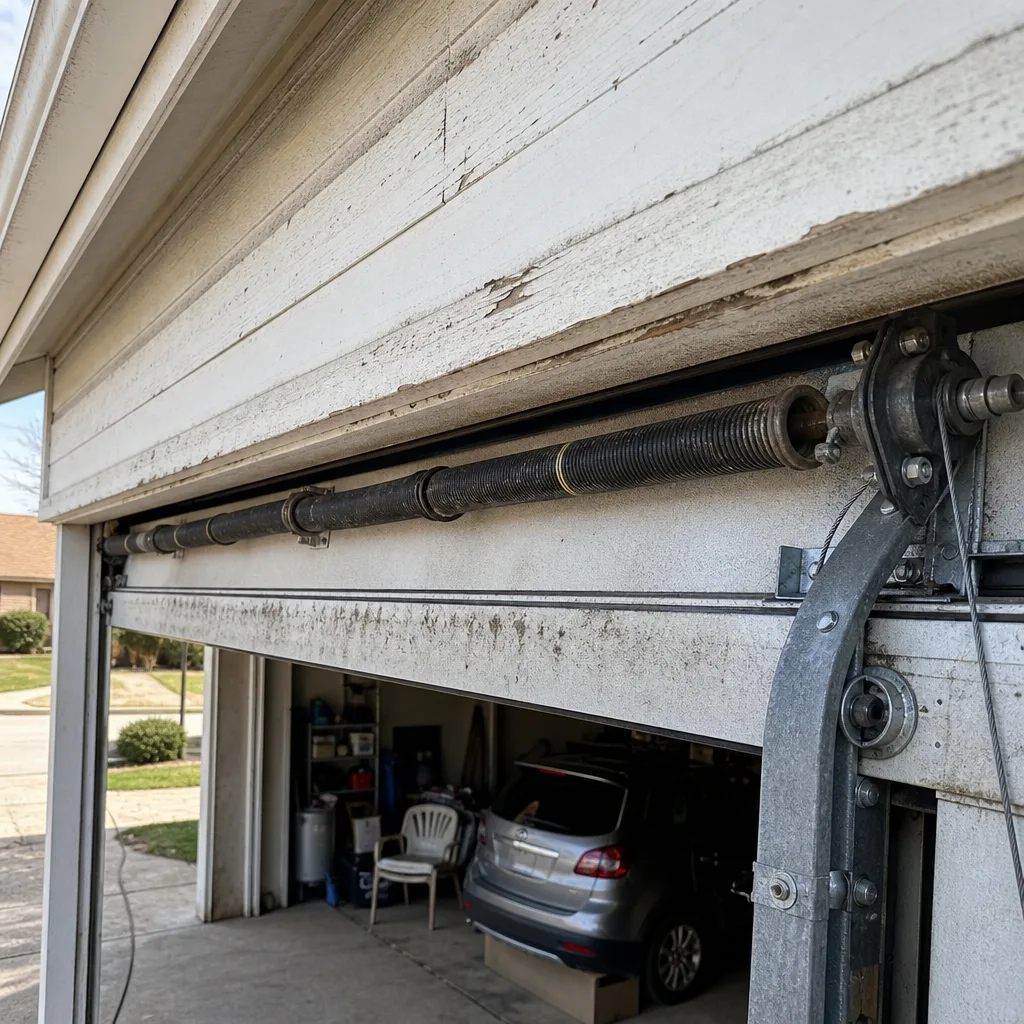
One thing we tell every homeowner in Carrollton: if your door is more than ten years old and you’ve never touched the springs, they’re not “fine.” They’re just not broken yet. A standard torsion spring cycles somewhere between 10,000 and 15,000 times, and a door that opens twice a day passes that mark in about fourteen years. The springs on a 2010-era home are due.
The Summer Heat Checklist: Springs, Seals, and Opener Motors
August in Carrollton pushes garage interior temperatures past 130 degrees. That heat does three specific things to your garage door system, and none of them are good.
First, the metal in your torsion springs expands. A spring that was tuned at 70 degrees behaves differently at 130, and a spring that was already near the end of its life will sometimes snap during the hottest stretch of the year. We see more broken spring calls in August than in any other month, including February. Second, rubber and vinyl weatherstripping dries out and shrinks in sustained heat, especially on west-facing doors that catch full afternoon sun. Third, the opener motor itself sits in that heat all day. Older opener units with plastic gears soften and strip when they run hot.
Your summer maintenance routine should take about ten minutes:
- Lubricate the springs. A light coat of white lithium grease or a silicone-based garage door lubricant on the torsion springs, about once every three months through the hot season. This doesn’t just reduce friction; it helps prevent the surface rust that weakens spring wire over time.
- Check the door surface for heat damage. If your door faces west and is made of steel, the paint and primer take a beating. Hairline scratches from the kids’ bikes turn into rust spots by October. Touch up small chips with matching paint before the rust spreads under the finish.
- Listen to the opener. If it sounds like it’s grinding or hesitating when the door is halfway up, the motor is working against something. That something is usually a dry roller, a dirty track, or a door that’s out of balance. All three are cheaper to fix in July than in October.
- Feel the door with your hand on a 100-degree day. If the bottom panel is noticeably hotter than the top, you’ve got poor ventilation and the heat is trapped. A garage that bakes like that will shorten the life of anything stored in it and put extra strain on the opener motor mounted to the ceiling.
If your opener is more than fifteen years old, it’s worth considering a garage door opener in Carrollton replacement before the heat kills it. Modern openers from LiftMaster and Chamberlain run cooler, operate quieter, and include battery backup that comes in handy during summer thunderstorm outages just as much as winter ice events.
Fall Prep: The Fifteen-Minute Step That Prevents Frozen Doors
This is the section that would have saved a lot of Carrollton homeowners a very bad week in February 2021. The single most important fall prep step for a North Texas garage door is this: replace the bottom seal before the first freeze, and treat the seal with a rubber protectant.
The bottom seal, also called the astragal, is a rubber or vinyl strip that runs along the bottom edge of the door. In Carrollton’s climate, it takes a beating from summer sun, and by October it’s usually dried out, cracked, and starting to lose its flexibility. When a hard freeze hits, that brittle seal bonds to any moisture on the concrete. The opener motor then tries to lift the door, the seal can’t flex, and one of three things happens: the seal tears, the opener strips its gear, or the door’s emergency reverse kicks in and you’re stuck at home with a garage that won’t open.
Here’s the October routine we run on our own doors and recommend to every homeowner in Carrollton:
- Inspect the bottom seal along its full width. Squeeze it with your fingers. It should be pliable, not stiff. If you can feel cracks or see daylight under the door, replace it. A new seal runs about $20 to $40 at local hardware stores and takes thirty minutes to install with basic tools.
- Apply a rubber protectant. A silicone-based spray made for automotive weatherstripping works well. Spray it on the seal, wipe off the excess, and let it dry. This adds flexibility and helps prevent the ice-bonding problem that causes most winter seal failures.
- Clear the floor where the door lands. Leaves, twigs, and the occasional stray acorn from Carrollton’s mature oak trees collect at the base of the door. Any debris on the concrete is an invitation for water to pool and freeze.
- Check the concrete itself. If your garage floor has cracks near the door line, water gets in, freezes, and widens the crack. Fill small cracks with concrete patch before the first freeze. It’s five minutes of work that prevents a bigger structural problem later.
If you’re not comfortable sliding a new seal into the aluminum retainer, call us. It’s a small job and we do it the same day. But the point stands: the fifteen minutes you spend in October is the difference between a garage that opens on a February morning and one that doesn’t.
Adjusting Opener Sensitivity Seasonally: Why It Matters More in Texas
Most homeowners don’t realize that their garage door opener has adjustable force and travel limits, and those settings should be checked twice a year. Here’s the Texas-specific reason why: temperature swings change how your door behaves.
In cold weather, the metal tracks contract slightly, the lubricant gets thick, and the door is heavier to lift. In hot weather, everything expands and the door runs looser. If your opener’s force setting is dialed too high, the motor will yank a frozen or obstructed door rather than stopping. If it’s set too low, the door won’t close all the way on a cold morning. Both problems are fixable in under five minutes with a stepladder and a screwdriver.
The procedure varies by brand, but for a LiftMaster or Chamberlain opener, here’s the basic sequence:
- Locate the force adjustment dials on the back or side of the opener unit. They’re usually marked “up force” and “down force” with arrows.
- Set the force to the minimum and test the door. If it reverses or won’t complete the cycle, increase the force slightly and test again.
- Repeat until the door opens and closes fully without reversing, then increase the force just enough that the door doesn’t hesitate.
- Test the auto-reverse with a roll of paper towels or a 2×4 laid flat on the floor under the door. The door should reverse within two seconds of contact. If it doesn’t, your force is too high and you need to back it down.
We recommend doing this twice a year in Carrollton: once in October before the cold weather arrives, and once in April after the heat kicks in. If you have a Genie opener, the process is similar but the dials may be digital instead of physical. Check your manual or call us and we’ll walk you through it over the phone.
One more thing worth knowing: if your door feels noticeably heavier to lift by hand in the winter, the issue isn’t just the cold. It’s likely that your springs are under-tensioned and have been for a while. The cold just makes the symptom obvious. Springs that are properly tensioned in October will lift evenly through February.
Tracks and Rollers: What Carrollton’s Dust Actually Does
Carrollton sits in a narrow band of North Texas that gets two kinds of particulate matter: construction dust from ongoing development and the fine red dirt that blows in from the west. Both settle in your garage door tracks, and both cause the same problem: accelerated wear on the rollers and hinges.
The track channels on either side of your door are not supposed to be lubricated. Grease in the track attracts dust, and the dust becomes an abrasive paste that grinds away at the roller bearings. If you’ve ever lived in Castle Hills or Indian Creek and noticed a fine layer of dust on everything in your garage within a week of cleaning, you know exactly what we’re talking about.
Here’s the cleaning method that works without damaging the finish on your tracks or door:
- Use a dry microfiber cloth to wipe out the inside of the track channels. Do this every three months if you’re in a high-dust area like northeast Carrollton near the Bush Turnpike construction zones.
- If there’s caked-on grime, dampen the cloth with water and a drop of dish soap. Don’t soak the track.
- Wipe the track dry and then inspect the rollers. Look for flat spots, cracks in nylon wheels, or wobble when the door moves.
- Apply garage door lubricant to the roller bearings, the hinge pivots, and the spring coils. Not the track.
We had a customer in the Rosemeade neighborhood whose door was running so rough she thought she needed a new opener. Turned out the track on one side was so clogged with pollen and dust that the roller was skipping instead of rolling. Thirty minutes of cleaning and it ran smooth. That’s what we mean when we say the opener is almost never the problem; the opener just tells you when something else is wrong.
If your door is loud, jerky, or has started leaving gray dust on the floor below the track, the rollers are past cleaning and need replacement. Nylon rollers with sealed bearings run quieter and last longer than the steel ones most builders installed originally. For a door with a Raynor or Clopay panel system, swapped rollers can make a fifteen-year-old door feel close to new.
What Seasonal Neglect Costs in Carrollton: Real Numbers
We quote these numbers every week, so here’s the honest math on what deferred seasonal maintenance actually costs a Carrollton homeowner. For a detailed breakdown, see our Garage Door Cost Breakdown: The Carrollton Homeowner’s Reference for 2026.
- Bottom seal replacement: $85 to $145 installed, depending on door width. A $20 seal and fifteen minutes of DIY time in October beats this every time.
- Broken torsion spring replacement (one spring): $180 to $300. If both springs break because one was already weakened, double it. Spring failure is the most common winter emergency we respond to in Carrollton.
- Opener motor replacement after a frozen-door strip job: $350 to $550 for a new LiftMaster or Chamberlain unit installed. The frozen door scenario we described earlier strips the plastic drive gear in about half the cases we see.
- Track realignment after an ice-related door jam: $120 to $200. If the door was forced while off-track, you can add panel damage to that bill.
- Full spring and cable tune-up with balance adjustment: $120 to $180, and it’s the best seasonal maintenance money spent in Carrollton. We recommend it every two to three years for doors in the 10-plus age range.
Add up the winter failure scenario: broken spring, torn seal, stripped opener gear. That’s a $500 to $800 repair bill, and most of it was avoidable with a seasonal routine that costs less than $60 in parts and a few hours spread across the year.
If you’re on the fence about whether your door needs attention, we offer a free second opinion on any written estimate from another company. No trip charge inside Denton County. You can call Otto’s Garage Door home and talk to a real person, not a phone tree, and we’ll tell you what needs doing now and what can wait.
Common Mistakes to Avoid
- Skipping fall prep because “it doesn’t get that cold here.” The freeze-thaw cycle is the problem, not the depth of the freeze. A single ice event in Carrollton can wreck a seal that was already dry from summer heat.
- Lubricating the tracks. Grease in the track lane is the fastest way to collect pollen and construction dust into an abrasive compound that wears your rollers down. Lubricate the moving parts, not the rails.
- Ignoring a door that’s slow in the winter. A door that hesitates or struggles when it’s cold isn’t just sluggish; it’s telling you the springs are under-tensioned or the opener force is set wrong. Both are cheap to fix now and expensive to ignore.
- Replacing the opener before checking the door balance. If your door isn’t balanced, a brand new opener will burn itself out trying to compensate. Check the balance by hand first.
- Waiting until the first freeze to test the auto-reverse. The paper towel test takes one minute. Do it in October and again in April, and you’ll know exactly how your opener behaves in the season you’re heading into.
- Using WD-40 on garage door springs. WD-40 is a solvent, not a lubricant. It will actually strip away the protective coating and accelerate rust. Use white lithium grease or a silicone-based garage door lubricant instead.
When to Call a Professional
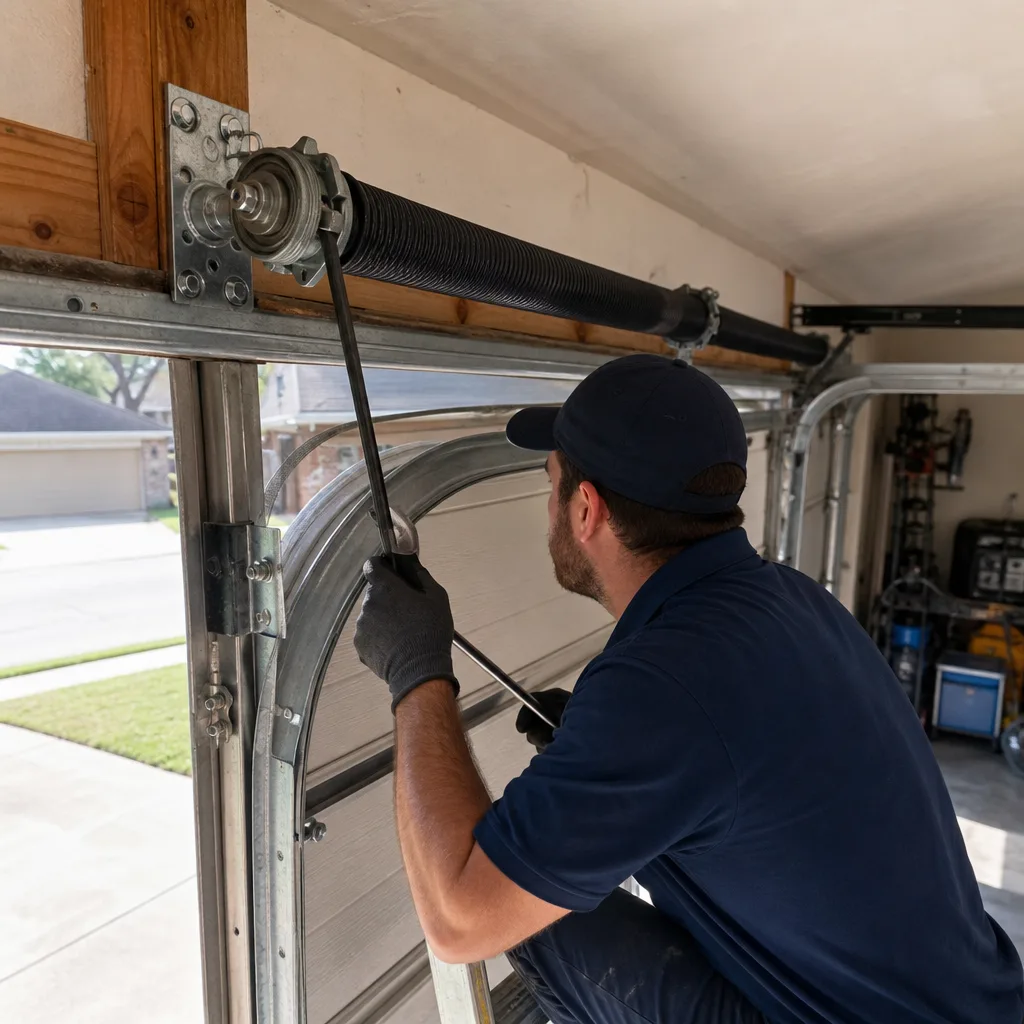
Seasonal maintenance covers about 70% of what can go wrong with a Carrollton garage door, but there are times when calling a professional is the only sensible move. See our DIY vs Professional Garage Door: The Carrollton Homeowner’s Decision Guide for help deciding. If your torsion spring snaps, if the door comes off the track, if a cable frays, or if the door drops when you pull the release cord, that’s not a weekend project. The springs on a standard residential door hold enough stored energy to seriously injure someone who doesn’t know how to wind and unwind them correctly. We’re not being dramatic; a door is 200 pounds riding on two springs, and we tell every homeowner the same thing: respect it.
If you’re seeing any of these signs, call us. We’ve been doing garage door installation in Carrollton and repair since 2004, and we’ll tell you straight what needs fixing and what doesn’t. Free estimates, quoted on the phone and held at the door. Call (945) 445-8489.
Frequently Asked Questions
Lubricate the springs, hinges, and roller bearings every three months, which means four times a year in Carrollton. The heat and dust here accelerate evaporation and contamination, so the schedule matters more than it does in cooler climates. Use white lithium grease on the springs and a silicone lubricant on the rollers and hinges. Skip the tracks entirely.
Your garage door froze shut because moisture on the concrete bonded to the rubber bottom seal when temperatures dropped overnight, and the opener couldn’t break the bond. Prevent it by replacing a dried-out seal before winter, applying a rubber protectant in October, and keeping the concrete where the door lands clear of leaves and debris that trap water. Call (945) 445-8489 if you need a seal replaced before the next freeze.
A DIY seasonal routine costs about $60 a year for lubricant, a new bottom seal, and a rubber protectant. A professional tune-up with balance adjustment runs $120 to $180. Compare that to the $500 to $800 repair bill for the classic winter failure we see in Carrollton every February. A spring and cable tune-up every two to three years is the best return on investment.
Yes, and you should. The force adjustment dials on a LiftMaster, Chamberlain, or Genie opener take about five minutes to set correctly, and they should be checked twice a year as Carrollton temperatures swing from below freezing to over 100 degrees. Set the force as low as possible while still completing a full open and close cycle, then test the auto-reverse with a 2×4 or a roll of paper towels on the floor.
Metal tracks contract in cold weather, lubricant thickens, and the door is physically heavier to lift, all of which slow the door down. If the slowdown is noticeable but the door still opens and closes fully, it’s normal Texas winter behavior. If the door hesitates, reverses mid-cycle, or won’t close completely, the springs are under-tensioned and need adjustment. Call (945) 445-8489 for an exact diagnosis; estimates are free.
The expansive clay soil under much of Carrollton expands when wet and contracts when dry, which can shift the garage slab slightly over time. Combined with freeze-thaw cycles, this means the concrete where your door lands may no longer be perfectly level, leaving gaps that the bottom seal can’t cover. Check the seal-to-concrete contact in October and April, and fill small concrete cracks before winter to keep water out of the freeze-thaw loop.
The Bottom Line
Carrollton’s climate is hard on garage doors in a specific, predictable way: summer heat bakes and shrinks the rubber, winter freezes crack and tear what the heat weakened, and spring pollen gums up everything in between. The fix isn’t complicated. Lubricate the moving parts every three months. Replace the bottom seal before the first freeze. Keep the tracks clean and dry. Test the opener’s auto-reverse twice a year and adjust the force settings for the season you’re entering. Twenty minutes a season beats a $700 repair bill any day of the year.
Written by Otto Reinhardt, Owner at Otto’s Garage Door, serving Carrollton since 2004.