
Last updated September 10, 2026
Full 25-point door and opener safety check with every visit - springs, cables, rollers, tracks, and your LiftMaster or Chamberlain opener included
You get a price before we start. It does not change when the truck arrives.
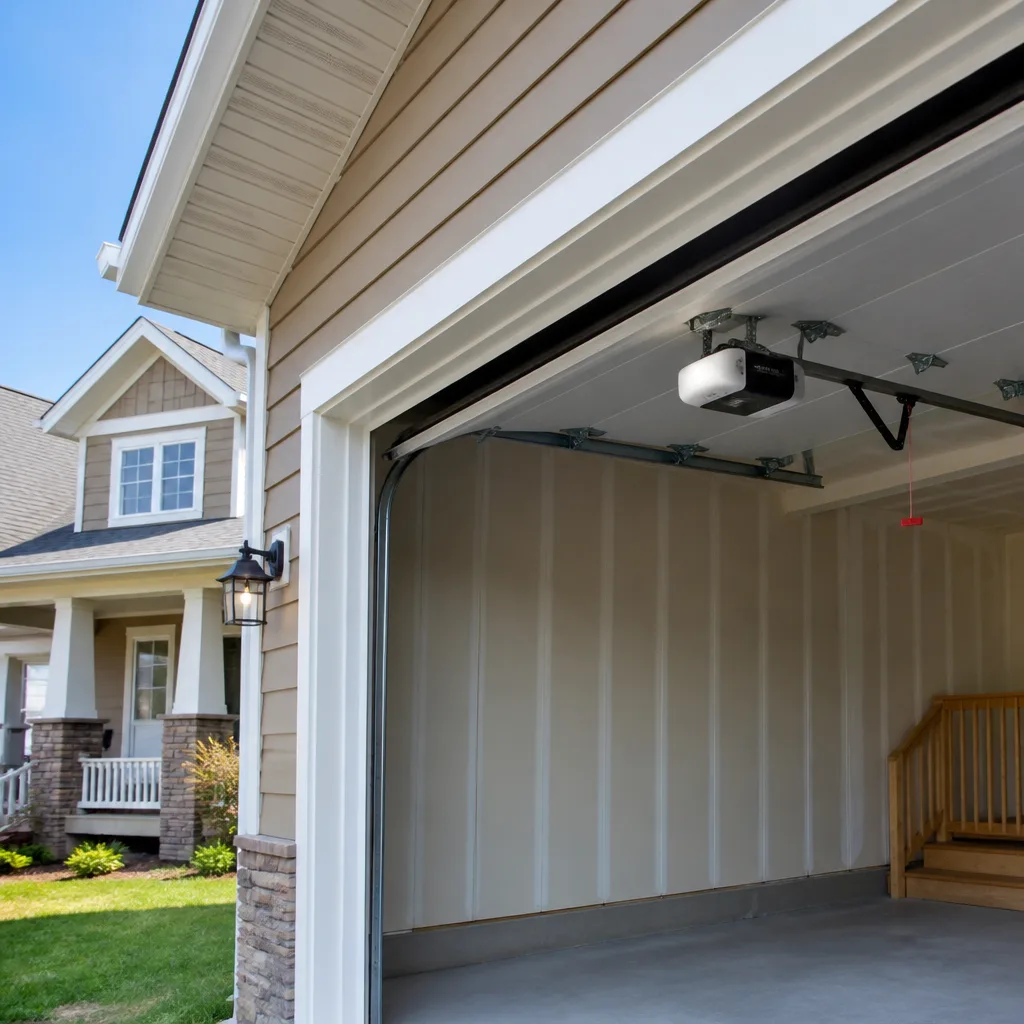
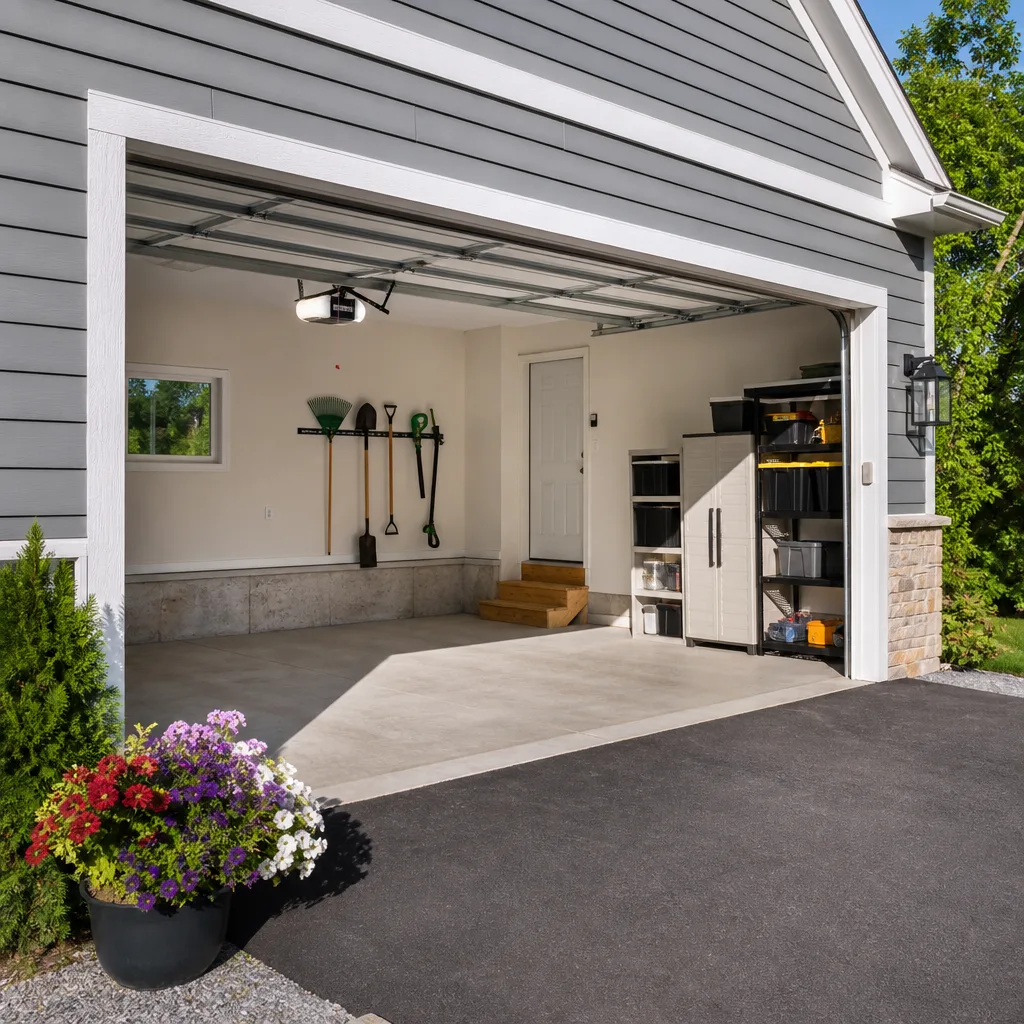
 Before
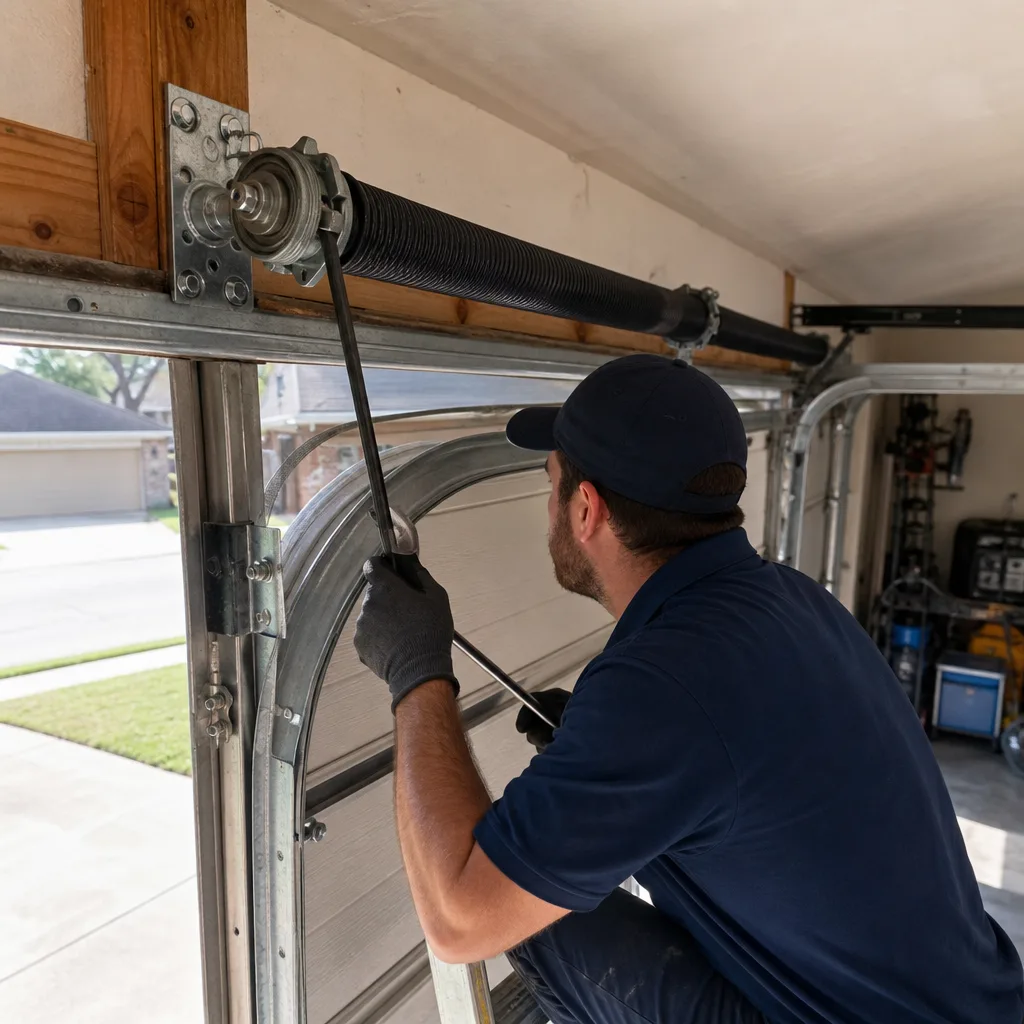 After
After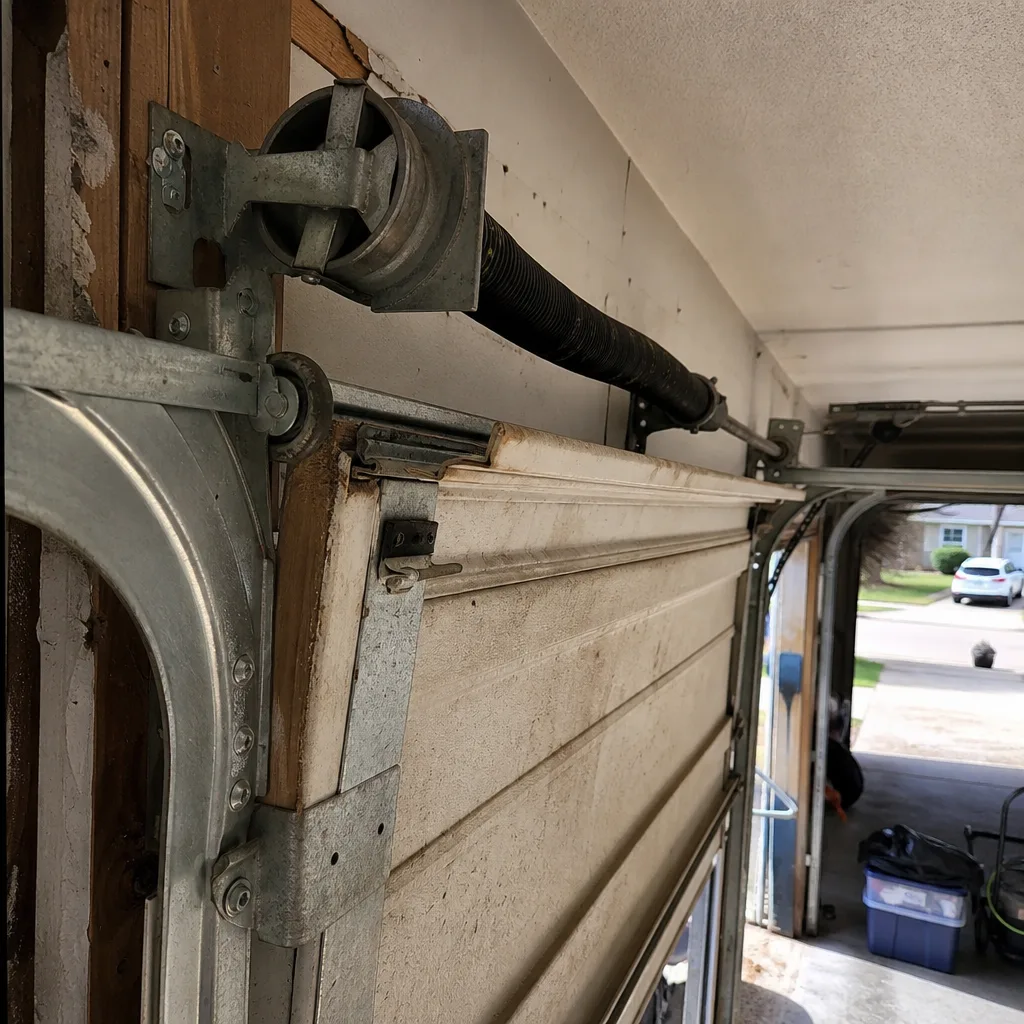 Before
 After
After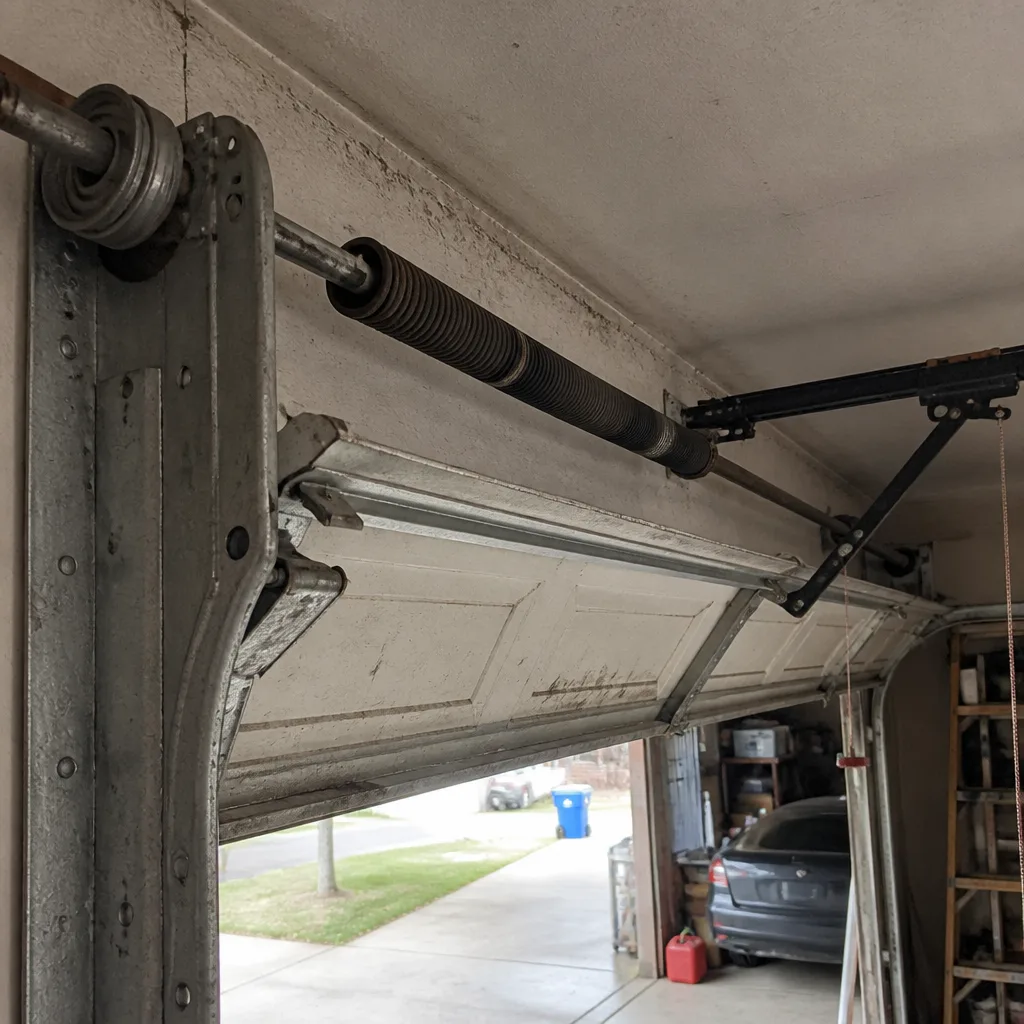 Before
 After
AfterGarage Door Warning Signs: A Carrollton Homeowner’s Reference Guide
A torsion spring doesn’t just break. It tells you it’s going to break - with a subtle gap you’d only notice if you looked, a slight wobble on the way up, or a groan that wasn’t there six months ago. Most Carrollton homeowners find out they were warned only after the spring lets go, usually at the worst possible time: 7 a.m. on a workday with the car trapped inside. This guide names every warning sign, explains what’s actually causing it, and tells you whether you can wait a few weeks or need to call before the weekend.
Quick Answer
Most garage door failures in Carrollton give clear warning signs weeks or months before they happen: a torsion spring with a visible gap, a door that’s slower on one side than the other, grinding or popping sounds, or an opener that strains before the door moves. The single most important check - a ten-second visual gap inspection on your torsion springs - can tell you if you’re days away from a spring snap. If you see a gap in the coil, a lean to one side, or hear metal-on-metal grinding, call a pro this week, not after it breaks.
Table of Contents
- The Ten-Second Visual Gap Check That Predicts a Spring Snap
- Why Your Door Is Slow: Spring Fatigue vs. Opener Failure (They Look the Same but Aren’t)
- One Side Lower Than the Other: Tracing the Lean to the Exact Part
- Sounds Decoded: Grinding vs. Squealing vs. Popping and the Hardware Each Points To
- Door Reverses Before It Hits the Floor? It Might Not Be the Sensors
- Cable Fray and Drum Wear: The Signs Hiding in Plain Sight
- What Carrollton’s Weather Does to Garage Doors That Other Texas Towns Don’t Deal With
- When to Call a Professional
- Frequently Asked Questions
The Ten-Second Visual Gap Check That Predicts a Spring Snap
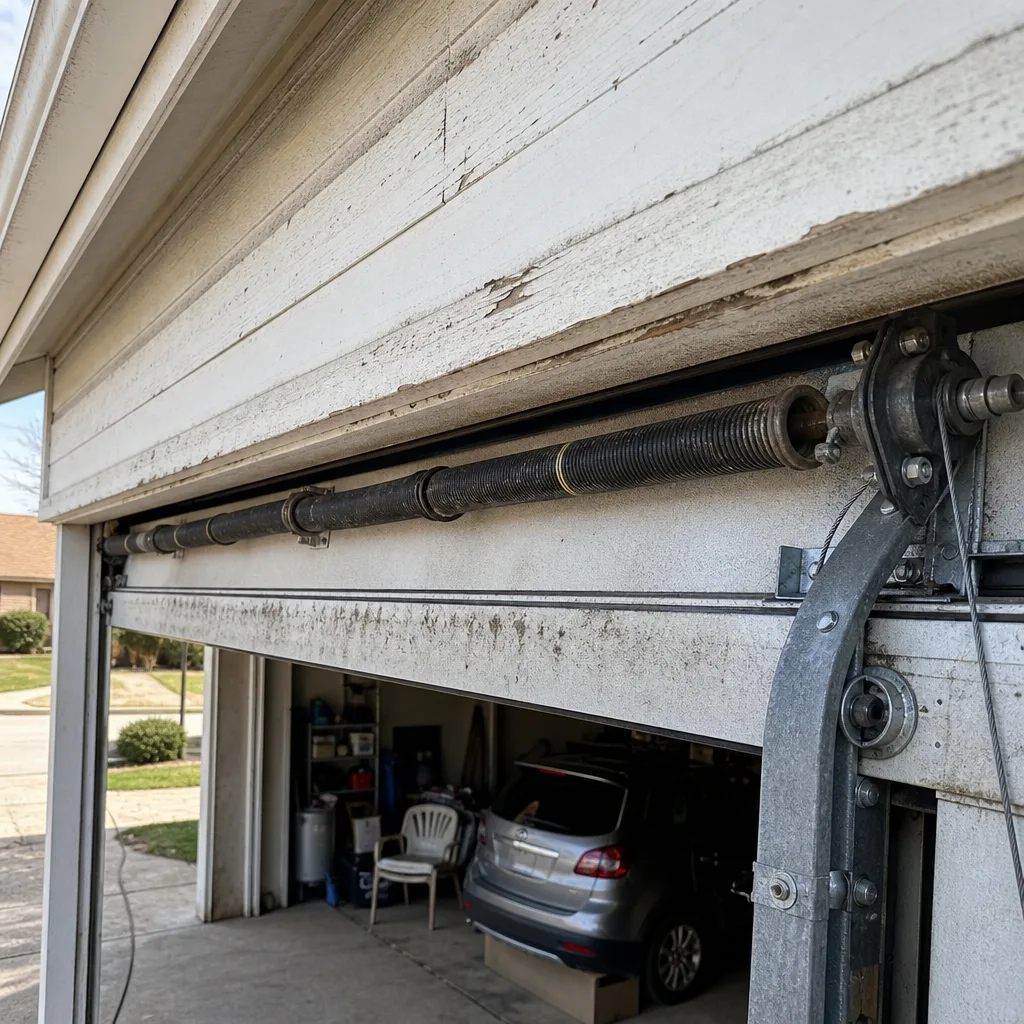
Here’s something most garage door companies won’t tell you, because it costs them a service call: you can see a torsion spring failure coming weeks before it happens. Stand inside your garage with the door closed, look up at the torsion tube running across the top of the door opening, and study the spring - the coiled steel cylinder wound around that tube. A healthy spring is one continuous coil from end to end, every winding touching the next. A spring that’s about to fail has a visible gap somewhere along its length, usually an eighth of an inch to a quarter inch wide, where the coils have separated.
That gap is the spring’s way of telling you it’s already cracked. Torsion springs don’t weaken gradually and then snap - they crack, usually at the first or second coil from the end, and the crack opens as the remaining coils take on more tension. The gap is the crack. It’s that simple. In Carrollton, where doors cycle more often than a lot of the country - we open and close them for work, for school runs, for a quick trip to Tom Thumb - a typical 10,000-cycle spring lasts about seven to nine years. Most homeowners never track cycles, so the gap check is the fastest way to know where you stand.
The ten-second check, step by step:
- Close the door. You want the spring in its loaded position, under tension.
- Stand inside and look up. You’re looking at the spring, not the tube hardware or the cables.
- Look for a gap in the coil. Any separation between windings that isn’t at the very end of the spring where it meets the mounting cone is a red flag.
- Check both springs if you have two. A two-spring system (common on 16-foot doors and heavier doors in Carrollton’s newer subdivisions) means both springs carry the load. If one has a gap, both should be replaced - the other is usually not far behind.
- Look for rust bloom. Surface rust you can brush off is cosmetic. Rust that has pitted the coil or formed a distinct line across the winding is structural and means the spring is in its last months.
If you find a gap, the spring is no longer carrying its rated load. The remaining coils are overloaded, which accelerates the crack, which widens the gap, which shortens the time until the snap. When a torsion spring snaps, it releases all its stored energy at once - that’s a bang loud enough to be mistaken for a car backfiring, and a broken spring end that can damage drywall, dent your car, or worse if you’re standing too close. I don’t say that to scare you; I say it because half the spring failures I’m called to in Carrollton happened while someone was in the garage, and a few happened while someone was working under the door. A gap is a warning. Heed it.
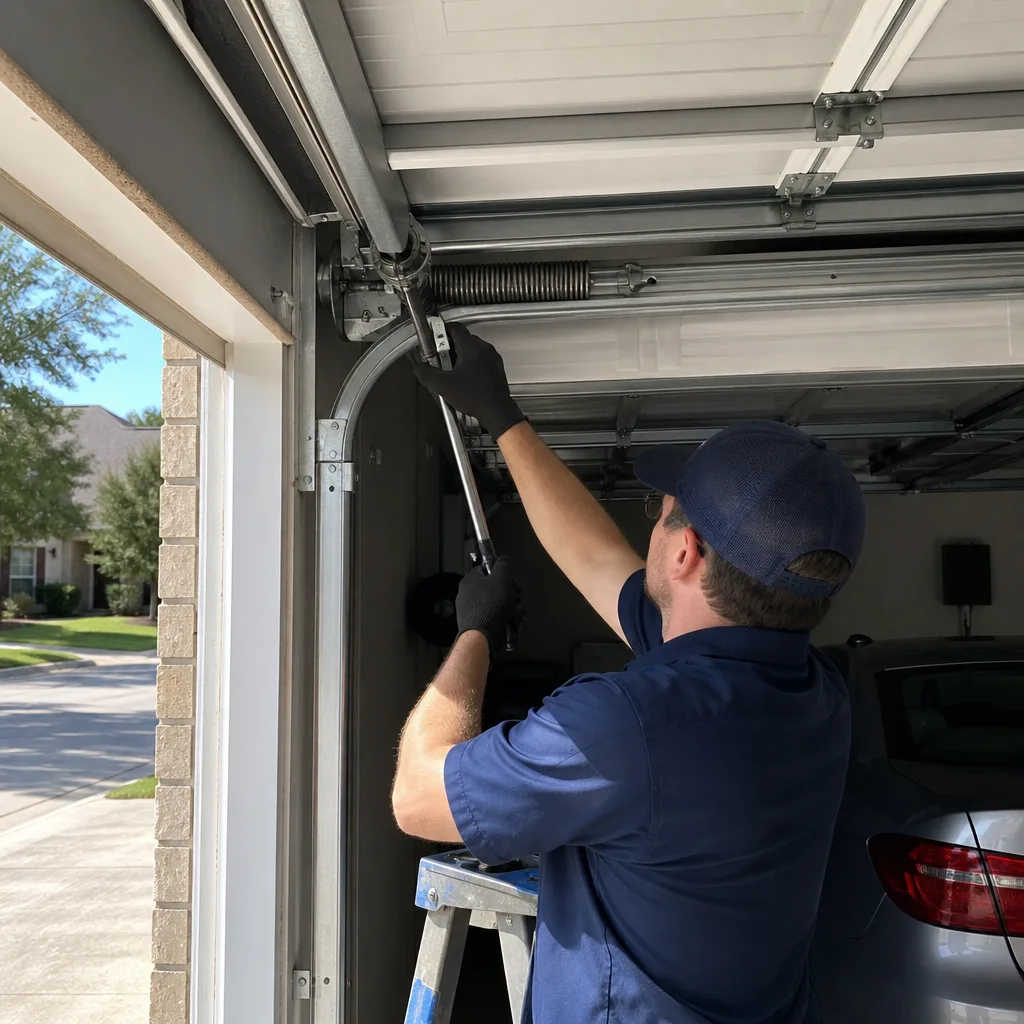
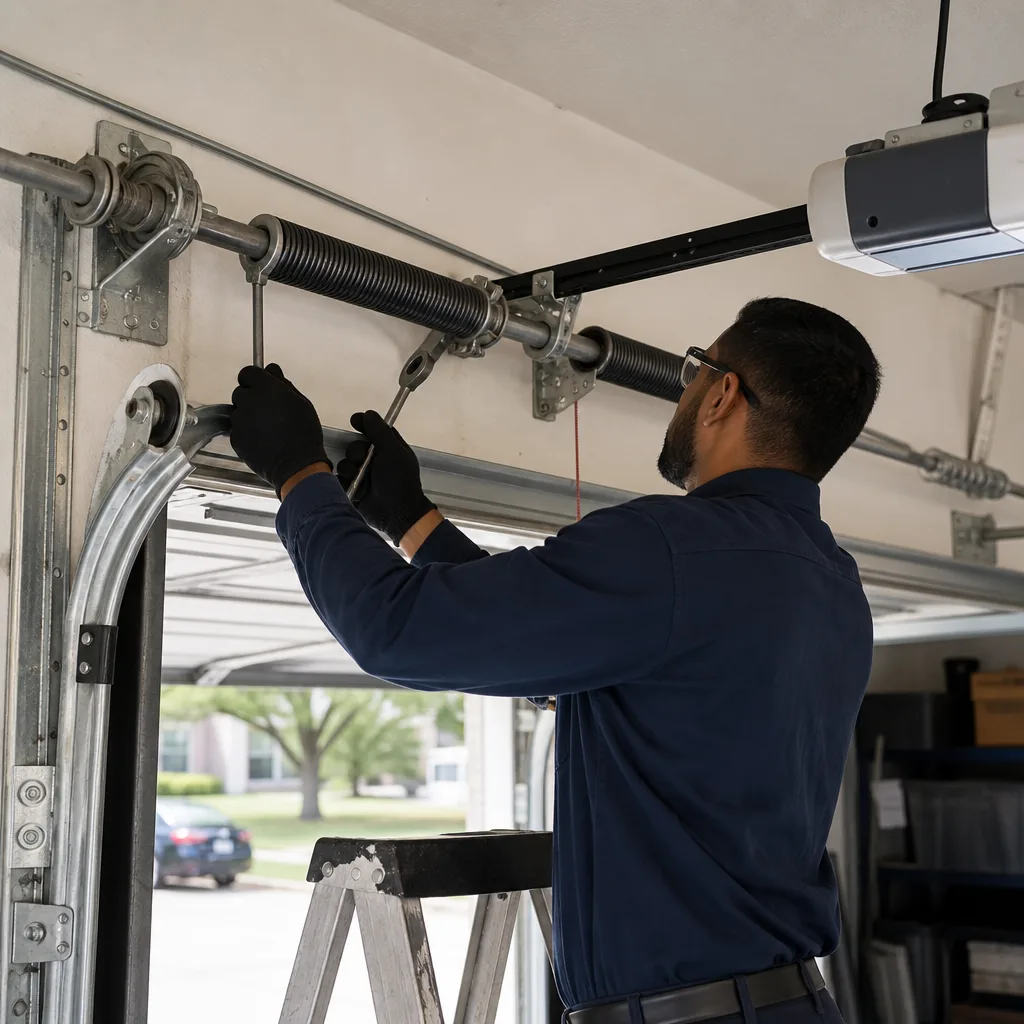
This is also the one repair I tell homeowners flat-out not to attempt themselves. A torsion spring under tension carries enough stored energy to break bone. If your gap check finds a gap, call Otto’s Garage Door for garage door repair in Carrollton and we’ll get it replaced before it lets go. The $40 Off Any Repair Over $200 offer applies, and the price is quoted on the phone and held when we arrive.
Why Your Door Is Slow: Spring Fatigue vs. Opener Failure (They Look the Same but Aren’t)
A slow garage door is the most common service call I get where the homeowner has already guessed the wrong cause. Here’s what happens: the door starts taking noticeably longer to open than it used to, or it hesitates at the bottom of the cycle, or it moves fine for the first foot and then lumbers. Most people assume the opener motor is dying. About half the time, the opener is fine and the springs are the problem.
Here’s the difference, and it matters because the fixes are completely different. A spring that’s losing tension - whether from age, fatigue, or a developing crack - is slowly transferring more and more of the door’s weight to the opener. Openers are designed to move a balanced door, not lift 200-plus pounds of steel on their own. When springs are tired, the opener works harder and the door moves slower. Replacing the opener in that situation is like putting a new motor in a truck with a seized wheel bearing: you’ve spent a thousand dollars and the problem is still there.
A genuinely failing opener, on the other hand, usually shows its own signs: a burned electrical smell, a motor that hums but doesn’t engage, stripped gears inside the drive unit, or intermittent operation. Opener motors also have a predictable lifespan - about 10 to 15 years in a normal Carrollton home, longer for belt-drive units from LiftMaster or Chamberlain that don’t get exposed to temperature swings like chain-drive units in unconditioned garages do.
How to tell which one you’re dealing with:
- Disconnect the opener and run the door manually. Pull the red release handle. If the door lifts easily by hand through the full travel, your springs are doing their job and the problem is the opener. If the door feels heavy, wants to slam, or won’t stay up halfway, the springs are losing tension.
- Listen to the motor while the door moves. A straining sound - like a drill running on a low battery - means the opener is working against excessive weight. That’s almost always springs, not the motor.
- Time it. A door that used to open in 12 seconds and now takes 18 is working against something. That something is usually spring fatigue.
- Check the age of your springs. If they’re seven years old or older and the door is slow, it’s the springs. If the springs are newer and the opener is a decade old, it’s probably the opener.
One more factor specific to this region: Carrollton sits in a climate where summer garage temperatures routinely top 110 degrees. Heat accelerates spring fatigue. A 10,000-cycle spring in a Michigan garage might last 12 years. The same spring in a Carrollton garage - especially one facing west with an uninsulated door - might be done in eight. The heat doesn’t make the spring weaker, exactly; it makes the steel lose its temper faster. The practical result is the same. If your door is slow and your springs are over seven years old, the springs are on borrowed time regardless of what the opener is doing. You can read more about the full range of spring and track issues on Otto’s Garage Door home page, or call us at (945) 445-8489 and describe what you’re seeing - I’ll tell you straight whether it sounds like springs, opener, or something else.
One Side Lower Than the Other: Tracing the Lean to the Exact Part
A door that sits crooked when closed - one side an inch lower than the other, sometimes with a visible gap at the bottom corner - is one of the most useful diagnostic clues a garage door gives you. The lean always points to a specific part, and the part depends on when the lean appears and how the door behaves during operation.
Case 1: Crooked at rest, opens and closes normally. This is almost never the springs. Look at the bottom seal and the track alignment. In older Carrollton homes - the ranch-style subdivisions built in the 1970s and 80s - we see this a lot because garage floors have settled unevenly. The slab sinks a half inch on one side over 40 years, and the door follows it. The fix is a thicker bottom seal or a door-side adjustment, not spring work. In other cases, one track has shifted slightly out of plumb, which you can spot by sighting down the track like a rifle barrel.
Case 2: Crooked at rest, and the door binds or jerks on the way up. Now you’re looking at a spring problem on the low side. Each side of the door is balanced by its own spring in a two-spring system. If the spring on the low side has lost tension - fatigue, micro-cracks, or one failed spring on a two-spring door - that side of the door carries more load than the other. The door twists slightly in the track and binds. If you suspect this, do the visual gap check on both springs. A single broken spring on a two-spring door is especially common in Carrollton because so many newer homes have 16-foot or 18-foot doors that use a pair of springs; one goes, the other holds the door up just enough to look fine from outside, but the door binds and jerks.
Case 3: Crooked only while moving, straight when closed. This points to the cables. Each side of the door has a lift cable that runs from the bottom bracket up to the drum at the top. If one cable is frayed, stretched, or starting to slip on a worn drum, that side of the door rises slower than the other. The door twists in the track during travel and straightens out when the load is off. This is the one to fix immediately - a cable failure under tension drops the door unevenly, which can throw the door out of the track or bring it down on whatever is underneath.
Case 4: Crooked at rest, and it’s been getting worse for months. This is usually progressive track wear or a failing bearing in one of the rollers. Carrollton’s clay soil is hard on garage slabs and door frames; a door that’s been fighting a settled frame for years will wear out the track on one side. The fix might be as simple as a track shim and a set of rollers, or it might be a full track replacement if the wear is deep. Either way, the door is telling you something is uneven. The longer you let it go, the more damage it does to itself.
The general rule: a lean that’s steady and quiet is usually the floor or the track. A lean that binds, jerks, or makes noise is usually springs or cables. If you’re not sure which category yours falls into, send us a photo or call - a five-minute conversation usually sorts it out, and if it’s something we need to see in person, the estimate is free and the price we quote is the price we bill. If you’re considering a full garage door installation in Carrollton, we’ll walk you through whether a new door is a better investment than repairing a 30-year-old one, but we’ll never push a replacement when a repair makes more sense.
Sounds Decoded: Grinding vs. Squealing vs. Popping and the Hardware Each Points To
Every garage door makes some noise. The question is whether the noise is new, whether it’s getting louder, and what pitch it’s at. Sounds are the language garage doors use to complain, and different parts have different voices. Here’s what each one means, decoded from 20 years of listening to doors in Carrollton garages.
Grinding: metal dragging on metal, no lubrication will fix it
A grinding noise - think of a coffee grinder working its way through rocks - is almost always a roller problem. The roller is either seized, meaning it doesn’t roll anymore and slides along the track, or the bearing inside the roller has disintegrated and the steel core is scraping the track. Sometimes it’s the track itself, worn through to a rough groove. Spraying lubricant on a grinding roller quiets it for about a day, then the grind comes back. Replacement rollers are cheap. A track that’s been ground down by years of bad rollers is not. This is a fix-it-this-month situation, not a fix-it-today emergency - but get it done before the track damage gets worse.
Squealing: high-pitched, constant, usually during movement
Squeal is what you hear when metal surfaces that shouldn’t touch are rubbing with pressure on them. Common culprits: a dry torsion spring (the coils rub against each other as the spring winds and unwinds), a pulley or bearing that’s run out of grease in the opener rail, or a hinge pin that’s dry and stiff. A quick shot of garage door lubricant - not WD-40, which is a solvent and will make it worse - on the spring, the hinges, and the opener rail usually silences a squeal. If the squeal comes back within a couple of weeks, the part is worn, not just dry. A squealing spring is also worth a gap check: the coils rubbing against each other more than usual can mean they’ve lost the factory coating and are working metal-on-metal, which accelerates wear.
Popping: sharp, sudden, rhythmic - often one pop per panel as the door goes around the curve in the track
A popping sound that seems to come from the door sections themselves is usually the panel hinges. Carrollton’s temperature swings - 40 degrees at 6 a.m., 95 degrees by mid-afternoon in April - make steel doors expand and contract. Over time, the hinge rivets or bolts work loose, and each panel joint pops as the door flexes around the track curve. It’s a five-minute tightening job in most cases. But a deeper, louder bang that happens once at the beginning or end of the cycle can be something else: a torsion spring binding in its mounting cone, or a cable snagging on the drum. That one’s worth a closer look.
And the one that needs no interpretation at all
A single loud bang - someone-fell-down-the-stairs loud - is a torsion spring snapping. It’s unmistakable once you’ve heard it. It means the door is now completely unbalanced, the opener will not lift it, and if you have a second spring, it’s now carrying double its rated load and is likely to follow within days or weeks. When this happens, don’t run the opener. Pull the release handle and check whether you can even lift the door manually; many doors with a snapped spring are too heavy to lift by hand. Then call. A spring snap is the one situation where I tell Carrollton homeowners not to wait until morning - if the car is trapped in the garage, that’s what 24/7 emergency service is for. Call (945) 445-8489 and a live person answers, even at 9 p.m., because I know exactly what it feels like to have your vehicle sealed inside and places to be.
Door Reverses Before It Hits the Floor? It Might Not Be the Sensors
Here’s the scenario I hear at least once a week: the door starts closing, travels most of the way down, and then reverses for no apparent reason. By the time I arrive, the homeowner has already cleaned the sensor lenses, checked the sensor alignment, maybe even replaced the sensors. And the door still reverses. There’s a more dangerous cause to rule out first, and it has nothing to do with electronics.
The safety sensors, those two little units near the bottom of the track on either side, do one job: they watch for anything crossing the beam between them and tell the opener to reverse if the beam is interrupted. A slow, deliberate reverse that happens at the same point in the door’s travel every time, about six to eight inches from the floor, is usually sensor-related - something near the floor is breaking the beam, or the sensors have been knocked slightly out of alignment. That’s the easy fix.
But here’s the one that worries me: a door that reverses unpredictably, at different heights, with no obvious sensor problem. In a garage with a torsion spring that’s cracked or fatigued, the door’s balance changes unpredictably. The opener’s force-sensing system - which detects resistance and reverses if the door hits something - can interpret the sudden drag of an unbalanced door as an obstruction. The door reverses not because something’s in the way, but because the opener is feeling the door fight itself. If you’ve cleaned and realigned the sensors and the door still reverses erratically, you need to check the balance before you keep resetting the travel limits.
The balance check, in three steps:
- Close the door and pull the red release handle.
- Lift the door manually to knee height, shoulder height, and overhead.
- At each point, let go. A balanced door stays put or moves slowly. A door that drops, rises on its own, or feels heavy at any point is unbalanced.
An unbalanced door with erratically reversing behavior usually means the springs are on their way out. Continuing to run the opener puts excessive stress on the opener gears, strips the drive, and eventually burns out the motor - turning a spring repair into a spring repair plus a new opener. That’s a $700 difference you don’t need to spend. Check the balance first. If it fails, call before the opener gets dragged down with it. If you need help choosing between repairing the opener or replacing it, our garage door opener service in Carrollton page spells out what to look for.
Cable Fray and Drum Wear: The Signs Hiding in Plain Sight
The springs get all the attention, but the lift cables are the part I personally watch closest, because a cable failure is the only common garage door failure that can bring the whole door down without warning. Cables don’t fatigue gradually like springs. They hold, hold, hold - and then they part, all at once, at the worst possible moment. The good news: frayed cables are visible if you know where to look.
The lift cables run vertically along each side of the door, from the bottom bracket (near the floor) up to the cable drum (on the torsion tube, near the spring). The spot that fails first is almost always where the cable meets the bottom bracket, because that’s where the cable flexes the most and where it collects moisture from the slab. In a Carrollton garage with an unsealed concrete floor, that moisture wicks up into the cable strands, and microscopic rust works into the wire rope. The outer strands start to fray - little whiskers of steel stick out. That’s your warning.
What to look for during a cable inspection:
- Whiskered strands near the bottom bracket or anywhere along the length. Once you see even a few broken strands, the cable is compromised and should be replaced. A cable with a 7×19 construction (19 strands in each of seven bundles) can look mostly intact while half its strands are already failed.
- Flat spots or kinks in the cable. A kink is permanent damage; the wire rope doesn’t recover from being bent sharply.
- Rust staining on the cable or the drum. Surface rust on the outer strands is normal in humid Carrollton summers. Flaking, pitted rust is not.
- Drum grooves that look sharp or deep. The drum is a machined pulley with a spiral groove for the cable. Ten years of cable movement cuts the groove deeper; once the edges get sharp, they start cutting the cable itself. A worn drum is a cable killer.
You don’t need to remove anything to check the cables. Stand on a step stool and look. If you see any of these signs, call before you run the door again - a cable that parts under tension sends the door down hard on one side, and the energy it releases has to go somewhere. Usually it goes into bending the door panel, the track, or whatever’s parked underneath. Replacing cables on a high-tension door is skilled work; about a third of the cable repairs I do in Carrollton are on doors where a homeowner or an unlicensed handyman attempted a cable replacement and either left the door dangerously unbalanced or made the problem worse. Don’t be that job. Garage door repair in Carrollton is what we do, and we carry the cables, drums, and springs for every major brand on the truck - LiftMaster, Chamberlain, Genie, Clopay, and more.
What Carrollton’s Weather Does to Garage Doors That Other Texas Towns Don’t Deal With
Carrollton sits on the Dallas-Fort Worth side of North Texas, which means three specific environmental factors that shorten garage door component life compared to other parts of the state. Homeowners who know this save money by spotting problems earlier.
1. Clay soil movement. Carrollton’s soil is largely Blackland Prairie clay, and clay doesn’t just settle - it heaves. Dry summers shrink it; spring rains make it swell. Over years, garage slabs and door frames move more in Carrollton than they do in Austin or San Antonio, where the soil holds moisture differently. A door frame that’s out of square by half an inch can cause uneven track wear, binding during operation, and a door that never quite seals on one side. We see this most in older neighborhoods around the historic downtown area, where 40-year-old slabs have had decades to move. The fix is usually track adjustment and spring balance work - not a new door.
2. Extreme heat cycles in unconditioned garages. Carrollton garages routinely hit 110 to 120 degrees in July and August. That heat doesn’t just age springs faster - it degrades opener electronics, dries out roller bearings, and bakes the grease out of the torsion spring coil. Homeowners who keep their garage doors uninsulated and face west get the worst of it. A spring that’s eight years old in a western-facing Carrollton garage may be functionally equivalent to a 12-year-old spring in a shaded garage in a cooler climate. Our general advice: if your springs are seven years old and your garage faces west, have them inspected even if the gap check looks clean.
3. Spring hail season. Carrollton sits in the hail belt that stretches across Denton and Collin counties. Hail damages roofs and cars, but it also dents garage doors - especially thin-gauge steel panels on entry-level doors. Dents don’t usually cause mechanical failure, but repeated hail exposure can break the enamel finish, expose the steel to moisture, and accelerate rust at the panel edges and along the bottom seal. If your door took hail damage and the dents are deep enough to fracture the paint, rust will follow within a year or two if not sealed. This is a maintenance issue more than a mechanical one, but it’s worth putting on the list.
For a full evaluation of how these factors are affecting your specific door, the quickest route is to have us do a safety inspection while we’re out for something else. Every quote we give includes a no-charge look at the springs, cables, rollers, and track balance - because when we’re in the garage anyway, looking costs nothing and finding a problem early saves you the breakdown.
Common Mistakes to Avoid
- Ignoring the visual gap on a torsion spring because the door “still works fine.” A spring with a visible gap in the coil is already broken. It hasn’t snapped yet, but it will, and it usually chooses the moment you have somewhere to be. The gap check takes ten seconds.
- Replacing the opener when the springs are the problem. We see this constantly. A homeowner spends $400 to $600 on a new opener, installs it, and the door is still slow because a tired spring is still forcing the opener to lift dead weight. Disconnect the door and test the balance before you replace anything.
- Lubricating a grinding roller instead of replacing it. Lube quiets the noise for a few days and then the metal keeps grinding. A seized roller grinds against the track, and a cheap $10 roller replacement becomes a $300 track replacement if you wait long enough.
- Using WD-40 on garage door parts. WD-40 is a water displacer, not a lubricant. It strips existing grease and leaves metal parts drier than they were before. Use a garage door lubricant made for the purpose - silicone-based for rollers and hinges, lithium-based for the opener rail.
- Attempting a DIY torsion spring replacement. I’ll say this plainly: torsion springs carry enough stored energy to cause serious injury or death if mishandled. You need winding bars sized for the spring, and you need to know the exact procedure. The money you save is not worth the risk. This is the one repair in the garage that professionals exist specifically to handle safely.
- Resetting the opener travel limits to compensate for a door that’s reversing on its own. If the door reverses erratically, something is causing resistance - usually balance. Cranking the limits so the opener pushes through the resistance damages the opener gears and masks the underlying problem. Fix the balance, not the settings.
- Ignoring a door that’s slightly crooked because it “still closes.” A small lean at rest becomes a bigger lean as parts wear. By the time a door is visibly crooked enough to notice from the street, you’re usually looking at worn tracks, a stressed spring on one side, and a bottom seal that’s no longer sealing. The earlier you trace the lean to its source, the cheaper the fix.
When to Call a Professional
Call a professional the day you notice a visual gap in a torsion spring, a frayed cable with broken strands, or a door that drops hard when you release it from the opener. Call when grinding noises persist after lubrication, when the door binds and jerks during travel, or when a door reverses erratically and the balance check fails. Call when a spring snaps - no matter the hour - because a broken spring can leave your vehicle trapped and your home more vulnerable. And call when you’re not sure. We’d rather spend five minutes on the phone telling you it’s nothing than headline a story about a spring snap that took out your windshield. Otto’s Garage Door offers garage door opener and spring service in Carrollton with free estimates, and you can reach us at (945) 445-8489.
Frequently Asked Questions
Look for a visible gap between the coils of the torsion spring - that’s a crack, and it means the spring is already failing. Rust pitting, a door that’s suddenly heavier by hand, or a bang during operation are additional signs. Call (945) 445-8489 for a spring replacement quote if you spot any of these.
Grinding almost always means a seized or disintegrated roller is scraping against the track. Lubrication quiets it temporarily; replacement fixes it. In Carrollton’s hot garages, roller bearings dry out faster than in cooler climates. Schedule a roller replacement before the track gets damaged.
Spring replacement in Carrollton typically runs $180 to $340 for a standard single spring, and $250 to $450 for a two-spring system, depending on door size and spring cycle rating. Our prices are quoted on the phone and held at the door - no surprises. Call (945) 445-8489 for an exact quote, and senior and veteran discounts always apply.
In most cases, yes - we keep the most common springs, cables, rollers, and opener parts for LiftMaster, Chamberlain, Genie, and Clopay on the truck, so a single visit handles the vast majority of repairs. For emergency spring snaps, a live person answers the phone 24/7 and we’ll get to you as fast as we can.
The most common cause is the safety sensors being misaligned or blocked, but if the door reverses erratically at different heights, the issue is usually spring balance. Test your door’s balance by releasing it from the opener and lifting it manually. If it doesn’t stay in place, the springs need attention before the opener gets damaged.
Yes. The Blackland Prairie clay under Carrollton expands and contracts with moisture, causing slabs and door frames to shift over time. That movement throws tracks out of alignment and causes binding during operation. Homes in older neighborhoods near downtown are especially prone to it. A track adjustment usually resolves the issue without replacing the door.
The Bottom Line
Garage doors talk. They talk in gaps, leans, groans, and pops - and once you know the language, you’ll spot a coming failure weeks before it strands you. The ten-second gap check on your torsion springs is the most valuable habit in home maintenance, because it catches the failure that causes the most damage and the most inconvenience. Everything else - the slow door, the crooked door, the grinding door - is an earlier and cheaper problem than it becomes if ignored. You can inspect, you can listen, you can test the balance. Leave the spring work and cable work to someone who does it every day, because those parts carry enough force to hurt you. And when you need us, the number is (945) 445-8489. I answer the phone. I quote the job. I stand behind it - in writing, for ninety days. That’s how we’ve done it in Carrollton since 2004, and it’s how we’ll keep doing it as long as the name on the van is the name on the license.
Written by Otto Reinhardt, Owner at Otto’s Garage Door, serving Carrollton since 2004.